


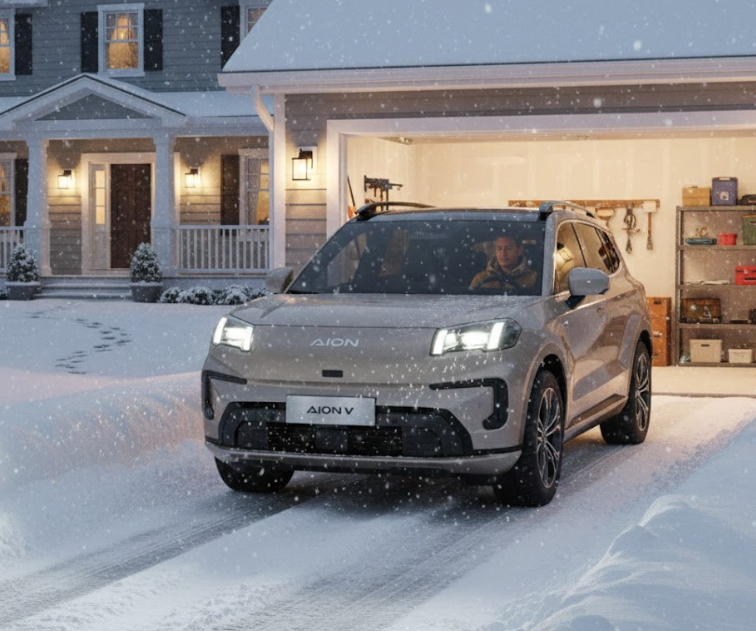
Winter brings beautiful snowy landscapes, hot cocoa, and cozy sweaters—but for electric vehicle (EV) owners, it brings a simple question: Does your EV really lose range in cold weather?
The short answer is yes—most EV batteries in winter would experience a noticeable drop in range when temperatures drop below freezing. This reduction can sometimes be significant, impacting daily commutes or longer trips.
So why does this happen? In this article, we’ll explore the reasons behind winter range loss and provide practical insights for drivers to maximize their EVs’ efficiency in cold conditions.
|
Quick Takeaway: 1. Cold temperatures slow the lithium-ion down, so EVs typically lose range in winter. Most EVs experience a 15–40% drop in winter range. 2. EV battery loss in winter not permanent. As the temperature goes up, the status would return to normalcy. 3. City driving is often more efficient than highway driving in cold temperatures. 4. Except for the cold temperature, the battery would be easy to run out due to the heating system, road conditions, battery temperature, etc. 5. GAC’s advanced Magazine Battery 2,0 offers enhanced thermal management and more stable winter performance, reducing the typical seasonal range dip. |
How Cold Weather Impacts the Decrease of EVs’ Batteries in Winter?
Know the Science Behind Lithium-Ion Batteries
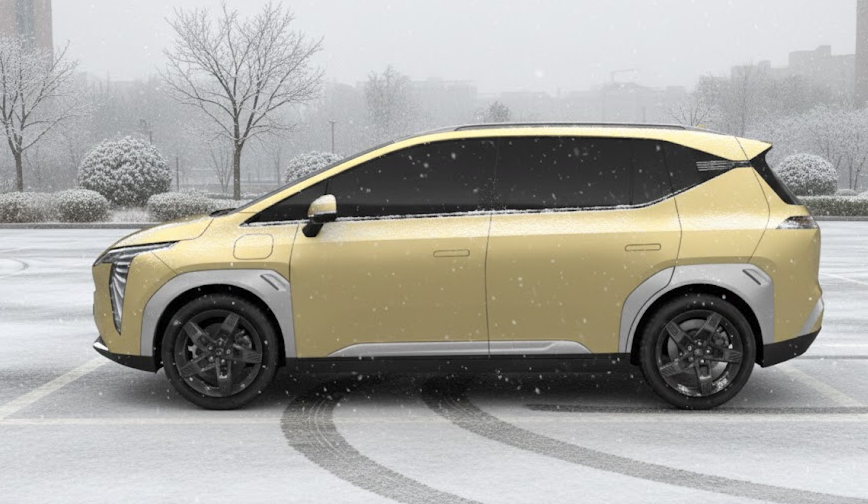
Lithium-ion batteries power nearly all modern EVs, and their efficiency depends on fast, smooth chemical reactions. In warm weather, lithium ions move freely between the battery’s electrodes. But in winter, low temperatures slow this movement down.
When the ions can’t travel as easily, the battery can’t release energy as efficiently, leading to reduced power output and shorter driving range. This is one of the main reasons the EV battery in winter often feels less responsive or drains faster.
|
Recognize Temporary vs. Permanent Effects A key point for drivers to remember is that most winter-related range loss is temporary. Cold weather reduces the EV battery's efficiency, but it does not permanently damage the battery cells. Once temperatures rise—or once the battery warms up through driving or preconditioning—its performance returns to normal. This means winter won’t shorten the lifespan of your EV battery forever. It simply affects how much energy is available at a given moment. Understanding this helps drivers stay confident: your EV battery in winter doesn’t mean “aging”—it’s simply reacting to the coldness. |
Understand Internal Resistance
Another crucial factor is internal resistance. When temperatures drop, the internal resistance of the battery increases. That means the battery must work harder to deliver the same amount of power it normally would in moderate temperatures.
Higher resistance results in greater energy loss within the battery itself, contributing to reduced range. It also means the vehicle may use additional energy to warm the battery so it can operate efficiently.
This increased effort—essential to protect the battery—further explains why an EV battery in winter uses more energy and loses range more quickly.
Know What Level of Range Loss to Expect
Understanding how much range an EV battery in winter typically loses can help drivers plan confidently instead of worrying about unexpected drops. For most electric vehicles, winter range loss usually falls between 15% and 40%. Milder regions may see only a small drop, while colder climates—especially those consistently below freezing—may experience reductions closer to the higher end of that range.
|
Compare City vs. Highway Winter Driving Interestingly, winter impacts city and highway driving differently. These reductions are normal and expected. They don’t reflect battery damage—just the temporary effects of running an EV battery in winter. 1. City driving can actually be more efficient in winter because:
2. Highway driving, however, often results in larger range losses because:
|
Why EVs Would Use More Energy in Winter?
The driving conditions in winter also accelerate the consumption of EV batteries, leading to a rapid loss.
-
Heating the Cabin Uses a Lot of Battery Power
Unlike gas cars that use engine heat to warm the cabin, electric vehicles rely entirely on battery power. Cabin heating can use a significant amount of energy, especially in sub-zero temperatures.
Whether it’s keeping the interior warm, defrosting the windshield, or maintaining driver comfort, the HVAC system is often one of the biggest winter energy drains on the batteries.
-
Battery Warming Systems Activate Automatically
Modern EVs are designed to protect and optimize the EV battery in winter. To maintain performance and prevent damage, EVs automatically warm the battery when the temperature drops. This thermal management system may activate before driving, while the vehicle is charging, or during the trip itself. Because the battery doesn’t operate efficiently when cold, the system redirects energy to heat the battery until it reaches its ideal temperature range.
While this feature is essential, it also consumes energy that would otherwise support driving range.
-
Winter Driving Conditions Increase Resistance
Driving through snow, slush, or icy roads increases rolling resistance. Your vehicle needs more power to overcome friction from snowy surfaces or heavy winter tires.
Even a thin layer of slush can make the electric motor work harder. Plus, cold air is denser, increasing aerodynamic drag. Combined, these factors reduce efficiency and make the EV battery in winter drain faster than usual.
-
Extra Features Add Up
Winter driving means using more accessories at the same time:
- Window defrosters
- Heated seats
- Heated steering wheels
- Additional exterior or fog lights
- Rear window heaters
Each of these draws power from the battery. Although individually small, together they create a noticeable impact on overall energy consumption.
How to Minimize Range Loss on the EV Batteries in Winter?
While cold weather naturally affects how an EV battery performs in winter, drivers have plenty of ways to preserve range and keep their vehicle running efficiently. With the right habits and built-in tools, winter driving can be smooth, predictable, and worry-free. Here are the most effective steps you can take:
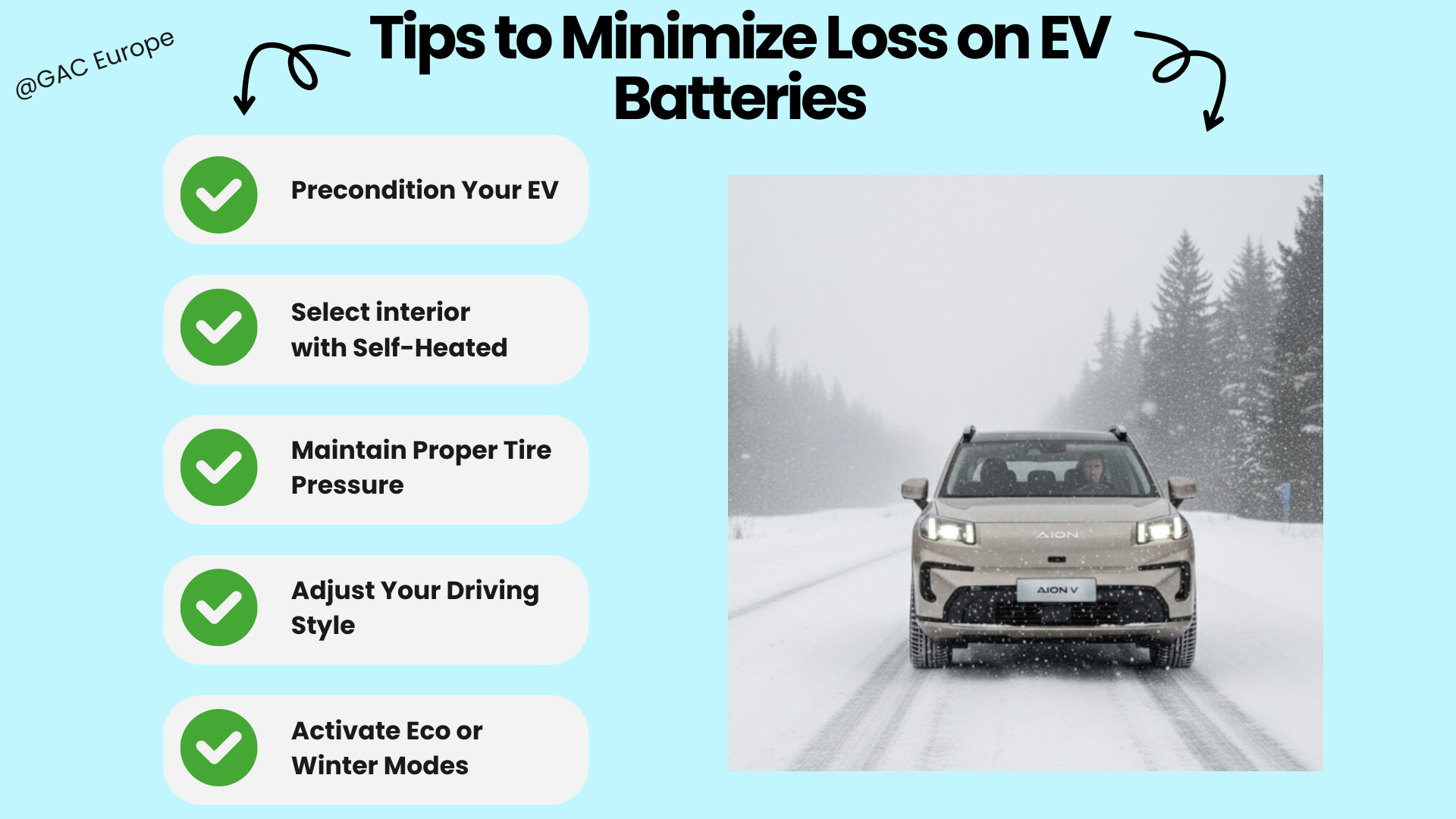
- Precondition Your EV Before You Leave
Preconditioning warms both the cabin and the battery before you start driving—ideally while the vehicle is still plugged in. This means you’re using grid power rather than draining your battery.
Preconditioning not only improves comfort but also helps the battery reach an optimal operating temperature, reducing the initial loss of range once you hit the road.
- Use Heat Strategically
Cabin heating is one of the biggest energy consumers for an EV battery in winter. Instead of relying solely on the HVAC system, prioritize more efficient alternatives:
- Heated seats
- Heated steering wheel
These features use significantly less energy and still keep you warm. Lowering the cabin temperature even slightly can save a noticeable range on longer drives.
- Maintain Proper Tire Pressure
Cold air reduces tire pressure, often by 1–2 PSI for every 5°C drop in temperature. Underinflated tires increase rolling resistance, making the motor work harder and consuming more energy. So, check your tire pressure regularly and inflate to the manufacturer’s recommended PSI. This simple habit improves efficiency, traction, and safety during winter.
- Adjust Your Driving Style
Winter is the ideal time to drive more gently. Smooth, gradual acceleration and slower cruising speeds reduce the strain on your battery. Additional winter-friendly habits include:
- Avoiding rapid throttle changes
- Maintaining steady speeds
- Increasing the following distance to brake less abruptly
These techniques help preserve energy and make your vehicle easier to control on slippery roads.
- Activate Eco or Winter Modes
Most EVs come with built-in driving modes designed for cold-weather efficiency. Eco mode, for example, limits power output and reduces HVAC consumption. Plus, winter mode can improve traction while optimizing how the EV battery delivers power in winter.
Turning these modes on helps your vehicle automatically manage energy more wisely in low temperatures.
Better Batteries for Winter EV Driving
As EV technology continues to evolve, automakers are designing batteries that perform more reliably in harsh climates. One standout example is GAC’s Magazine 2.0 Battery, engineered to address many of the challenges drivers face with an EV battery in winter.
This next-generation battery system uses enhanced thermal management to maintain a stable operating temperature even in extremely low environments. Parked overnight in freezing conditions or navigating snowy commutes? Our Magazine 2.0 Battery efficiently regulates its core temperature to ensure better power delivery in coldness.
Its advanced structure and safety-focused design also help reduce energy losses typically seen in cold weather. This means drivers can expect more stable winter range, faster warm-up times, and improved reliability—key advantages for anyone who travels through long winters or sub-zero climates. Ultimately, GAC’s innovation provides EV owners with the reassurance they need behind the wheel, no matter the season.
You can get a register on test-drive from the GAC Europe website to experience the power of Magazine Battery 2.0 in winter now!