


South Africa's motorists are no strangers to pain at the pump, but 2026 has delivered a shock that cuts deeper than most. In a single month, petrol prices surged 14% and diesel jumped nearly 24%, pushing inland 93-octane petrol to R26.52 per litre — the highest price ever recorded. Statistics South Africa has called the April and May 2026 increases among the sharpest in real terms in five decades.
For ordinary drivers, the maths is brutally simple. A family commuting 100 km per day in a vehicle averaging 10 L/100 km now spends more than R2,600 per month purely on petrol. Long-distance commuters who drive between cities for work — a reality for millions of South Africans — are watching transport costs consume a growing share of household income. Transport price increases also ripple through the entire economy, pushing up the cost of food, goods, and services.
Against this backdrop, a question that once felt premature for South Africa is now firmly on the table: is it time to buy an EV? And if so, which electric vehicle options make sense for South African roads, infrastructure, and budgets?
The Real Cost Comparison: Electric Vehicle vs Petrol Car
When asking whether to buy an EV, the purchase price is almost always the first number people focus on, and it does matter. But the total cost of ownership over a five-year period often tells a very different story, especially when fuel prices are rising as steeply as they are today.
-
Cost Per Kilometre: Petrol vs Electricity
The running cost gap between an electric vehicle and a petrol car has never been wider in South Africa. At current prices, driving a petrol car that consumes 10 L/100 km costs approximately R2.40 to R2.65 per kilometre. An EV charged at home on municipal electricity, on the other hand, costs roughly R0.93 per kilometre. That is a saving of more than 60% per kilometre driven.
The numbers compound quickly over a typical commute. A driver covering 50 km per day saves approximately R26,900 per year just on fuel. At the current trajectory, with petrol heading toward R27/L and above, that gap widens further. Every rand per litre increase in petrol adds approximately R1,825 to the annual running cost of a standard petrol car, while home electricity tariffs, regulated by municipalities, remain comparatively stable.
Public DC fast-charging costs more, typically R7.00 to R7.35 per kWh, but even at those rates, EV driving costs roughly R1.40 per kilometre: still materially cheaper than petrol at current prices.
-
Maintenance and Servicing Differences
The electric vehicle vs petrol car cost comparison extends well beyond what goes into the tank or the charger. EVs have approximately 60 to 70% fewer moving parts than combustion-engine vehicles. There is no engine oil to change, no spark plugs to replace, no exhaust system to maintain, and no timing chain to worry about. Brake wear is also reduced significantly because regenerative braking does most of the deceleration work.
In practical terms, EV owners in South Africa report monthly maintenance costs of R200 to R400, primarily covering tyres, wipers, and occasional brake checks. The equivalent figure for a petrol car, factoring in scheduled oil services, filters, and routine wear items, runs R800 to R1,200 per month. Over five years, that difference represents R36,000 to R48,000 in additional costs for the petrol car owner.
-
Residual Value and Long-Term Ownership Costs
Residual value is an area where EVs have historically faced questions, particularly as battery technology evolves and newer models enter the market. In South Africa's context, two factors are shifting this conversation:
- First, demand for affordable, fuel-efficient vehicles is growing as petrol prices rise, and well-specified EVs from credible brands now carry genuine appeal in the used market.
- Second, buyers who plan to hold a vehicle for five years or more absorb the cost over a longer runway, which makes the lower running costs even more impactful.
The 5-year total cost of ownership comparison consistently favours EVs when factoring in fuel and maintenance savings, even when accounting for EVs' higher purchase prices. One analysis comparing a mid-size EV with a comparable petrol SUV found the petrol vehicle cost approximately R210,000 in fuel over five years, versus roughly R60,000 for the EV using a mix of home and public charging. That R150,000 difference is a meaningful offset against any price premium at purchase.
-
Factoring in Load Shedding and Home Charging Solutions
It would be dishonest to discuss buying an EV in South Africa without addressing load shedding. Power interruptions do affect home charging schedules and, for some, mean occasional trips to public chargers. However, the load shedding picture is more nuanced than the instinctive concern suggests.
South Africa has more free-standing homes with private driveways per capita than most developed markets. This means a higher proportion of EV owners can install a home wall charger and charge overnight during periods when power is available. It is a routine that handles daily commuting needs without any dependence on public infrastructure.
For those with solar installations or solar-plus-battery setups, the equation tips even further in favour of EVs. Charging a vehicle on self-generated solar energy at near-zero marginal cost eliminates both the petrol price risk and the load shedding risk simultaneously.
Beyond that, some EV models offer Vehicle-to-Load (V2L) capability, allowing the car battery to power household appliances during outages. In this respect, an EV becomes a transport solution but a mobile energy buffer, together with a particularly compelling proposition in the South African context.
BEV vs HEV vs PHEV: Which Type Suits You?
One of the reasons many buyers hesitate when considering whether to buy an EV is confusion about what "electric vehicle" actually means. The term covers three meaningfully different technologies, each suited to different driving profiles and infrastructure situations. Understanding the BEV vs HEV vs PHEV distinction is a practical first step before visiting a showroom.
-
BEV (Battery Electric Vehicle): Fully Electric, Zero Tailpipe Emissions
A BEV runs entirely on electricity stored in an onboard battery. It produces zero tailpipe emissions and has no combustion engine whatsoever. It must be charged, either at home or at a public charging station, and its range is determined entirely by battery capacity. BEVs represent the most cost-efficient driving technology available today on a per-kilometre basis.
The right buyer for a BEV is someone who drives a predictable daily route, has access to a home charger or reliable workplace charging, and does not regularly undertake unplanned long-distance trips beyond the vehicle's single-charge range.
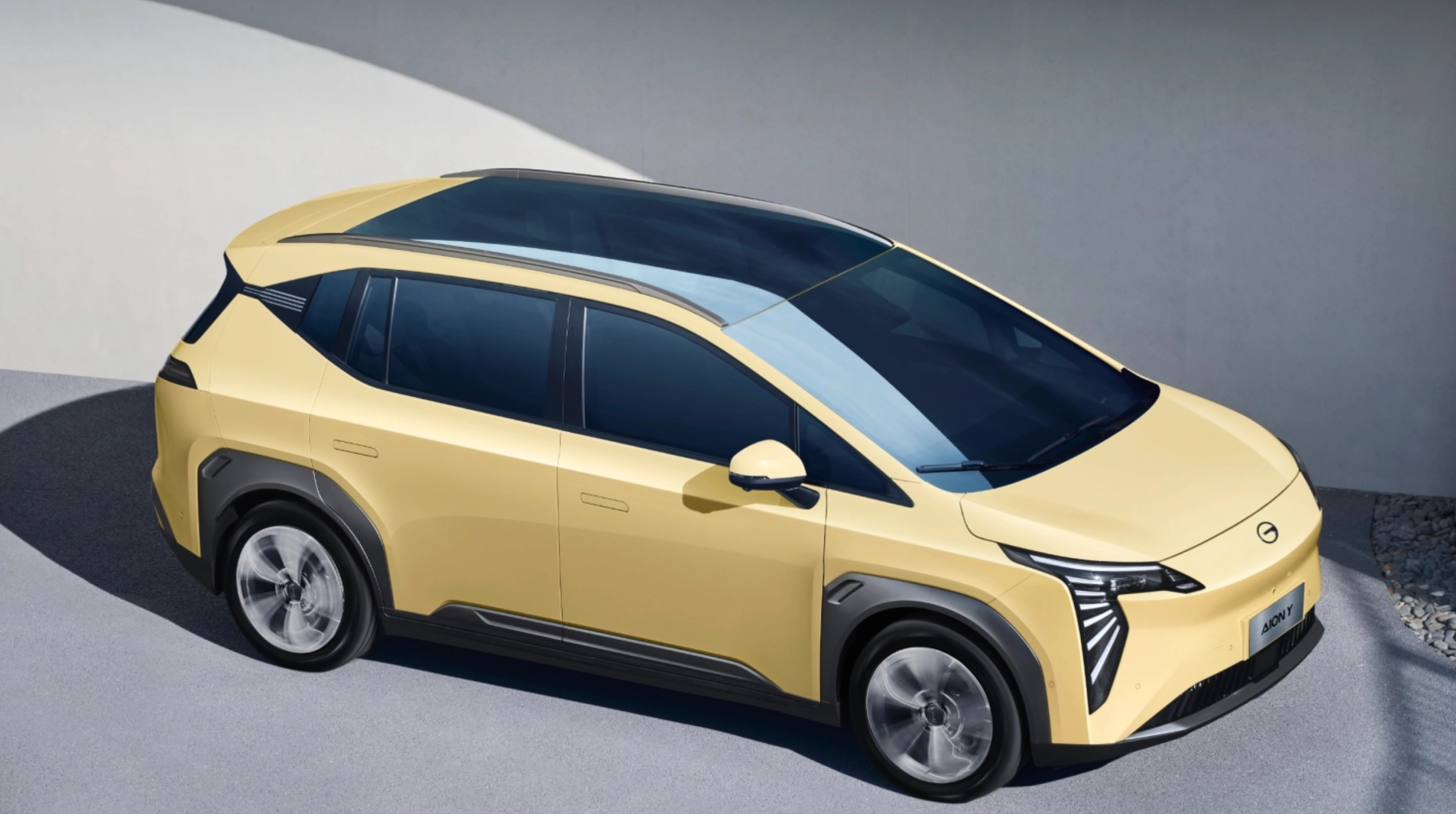
In South Africa, GAC's answer in this segment is the GAC AION Y. Designed as a New Trend Pure Electric SUV, the AION Y is built around a 63.2 kWh Lithium Iron Phosphate (LFP) battery paired with a 150-kW electric motor producing 225 N·m of torque. With a claimed NEDC range of 490 km on a single charge, it covers the daily needs of most South African urban commuters with several days between charges.

-
HEV (Hybrid Electric Vehicle): Self-Charging, Efficient by Design
A conventional hybrid, or HEV, pairs a combustion engine with an electric motor and battery system. The electric system assists the petrol engine during acceleration and low-speed driving, reducing overall fuel consumption without changing the refuelling routine at all.
HEVs are particularly well-suited to South Africa's mixed infrastructure reality. They offer meaningful fuel savings over a standard petrol car while requiring no change to the driver's habits. For buyers outside major city centres, or those who regularly make long intercity drives where charging stops are impractical, a HEV offers an excellent middle ground.
-
PHEV (Plug-in Hybrid Electric Vehicle): Electric Commuting Plus Petrol Backup
A PHEV combines the best attributes of BEV and HEV technology. It carries a larger battery than a conventional hybrid, large enough to cover a meaningful daily commute on electricity alone and can be plugged in and charged externally. When the battery is depleted or on long trips, the petrol engine takes over seamlessly, eliminating any range anxiety.
The ideal PHEV owner commutes within the electric range on most days, capturing maximum fuel savings, while retaining the freedom of a full petrol backup for weekend road trips or unplanned long-distance travel. PHEVs are particularly compelling in South Africa's current climate because they let buyers begin benefiting from electrification immediately, without committing to a pure-electric lifestyle.
GAC's flagship in this category is the GAC M8 PHEV, an era-defining smart luxury MPV. South Africa's first plug-in hybrid MPV is a landmark product by any measure. Equipped with a magazine-style battery delivering a 106 km pure electric range (WLTC standard), the M8 PHEV allows the majority of South African daily commuters to complete their working week without visiting a petrol station. When both the electric and petrol systems combine, total range extends to over 1,000 km — enough for long-haul road trips without a carefully planned fuel strategy.
.jpg)
South Africa's EV Market in 2026: The Tipping Point Arrives
Asking whether the electric vehicle South Africa market is ready has become a different question in 2026 than it was even two years ago. The honest answer is that the market is not complete — but it has matured enough to be genuinely practical for a meaningful portion of buyers.
Charging infrastructure has expanded significantly. From fewer than 200 public charging stations in 2022, South Africa now has approximately 445 public charging sites with over 1,200 connectors across the country. Major urban centres — Johannesburg, Cape Town, Durban, and Pretoria — have seen the strongest growth, with charging points now available at destinations including Sandton City, the V&A Waterfront, and Menlyn Park. For the urban buyer who charges at home overnight and uses public infrastructure only occasionally, the network is workable today.
From a regulatory standpoint, 2026 has brought meaningful policy movement. The Taxation Laws Amendment Act introduced a 150% tax deduction for EV production facilities from March 2026, signalling government commitment to building local EV capacity. The question of whether is oil prices going up has also become unavoidable: with Brent crude above $100 per barrel and geopolitical uncertainty showing no signs of resolution, the financial argument for electrification strengthens with each passing month.
The shift in buyer behaviour is also measurable. While full BEV registrations fluctuated in 2025, PHEV registrations in South Africa grew by approximately 280%, reflecting buyers who want to capture electrification benefits while pragmatically managing infrastructure concerns. Over 20 distinct electric or electrified models are now on sale — more than at any point in South Africa's automotive history.
GAC Motor has emerged as one of the most complete electrified portfolios available in the South African market, spanning all three categories simultaneously: the AION Y (BEV), the M8 PHEV, and the upcoming hybrid electric vehicles. This breadth reflects the strength of the Guangzhou Automobile Group, China's fifth-largest automotive producer, which has spent decades building deep engineering capability across electrified powertrains. The AION V — GAC's electric SUV sold in other markets — holds dual five-star safety ratings from Euro NCAP and ANCAP, a credentialling benchmark that signals genuine engineering rigour rather than fast-follower repackaging. GAC's South African dealer network, now active across the country and continuing to expand, provides the after-sales infrastructure that long-term EV ownership demands.
Conclusion
Fuel prices in South Africa have stopped being a background variable and become a defining factor in vehicle purchasing decisions. At R26.52 per litre — with further increases anticipated — every petrol car on the road is becoming more expensive to operate with each passing month. The decision to buy an EV is no longer about being early. It is about matching the right technology to your actual driving life, and recognising that 2026 has brought the model choice, the infrastructure maturity, and the financial justification together in a way that simply did not exist a few years ago.
Whether that means zero-emission daily driving in the GAC AION Y with its 490 km range and V2L capability, or the long-range flexibility of the GAC M8 PHEV for the family or executive who travels far — the question is no longer whether to consider electrified motoring in South Africa. The question is which version of it suits you best.
Contact us today to get more information about electric vehicle in South Africa!
Reference
- 93-octane petrol price: R26.52/L; petrol up 14%, diesel up ~24% (May 2026) — Central Energy Fund (CEF) / South African Department of Mineral Resources and Energy, monthly fuel price announcement, effective 7 May 2026.
- April and May 2026 fuel increases among the sharpest in real terms in five decades — Statistics South Africa (Stats SA), Consumer Price Index release, May 2026.
- Petrol car running cost: ~R2.40–R2.65/km (at 10 L/100 km) — Derived calculation: 10 L/100 km × R26.52/L ÷ 100 = R2.652/km.
- EV home-charging cost: ~R0.93/km; saving of more than 60% per km — Green Cape / Meridian Economics Electric Vehicle Fiscal Incentive Study, 2024; home electricity tariff reference: City of Johannesburg standard residential tariff schedule 2025/26.
- Annual fuel saving of ~R26,900 for a 50 km/day commuter — Derived calculation based on R2.65/km (petrol) vs R0.93/km (EV) over 18,250 km/year.
- Each R1/L petrol increase adds ~R1,825/year to a petrol car's running cost — Derived calculation: 10 L/100 km × R1.00 × 18,250 km/year ÷ 100 = R1,825/year.
- Public DC fast-charging: R7.00–R7.35/kWh; EV cost ~R1.40/km on public chargers — GridCars / Charge.co.za published tariff schedules, Q1 2026.
- EVs have ~60–70% fewer moving parts than combustion-engine vehicles — Rocky Mountain Institute, The Economics of Clean Energy Portfolios, 2023 edition.
- EV monthly maintenance: R200–R400; petrol car: R800–R1,200/month — AutoTrader South Africa, Cost of Car Ownership Report, 2025; Lightstone Auto servicing cost data, 2025.
- 5-year fuel cost comparison: ~R210,000 (petrol SUV) vs ~R60,000 (EV) — Meridian Economics, Total Cost of Ownership: EVs vs ICE Vehicles in South Africa, 2024.
- GAC AION Y specifications: 63.2 kWh LFP battery, 150 kW / 225 N·m, NEDC 490 km range, 0.278cd drag coefficient, 4,535 mm length, 2,750 mm wheelbase, Magazine Battery withstands 1,400°C, Premium variant with V2L bidirectional charging — GAC Motor South Africa official product page and specification sheet: gacgroup.com/en-za/suv/aion-y and gacgroup.com/en-za/configuration/aion-y/2024.
- GAC M8 PHEV: 106 km pure electric range (WLTC), combined range over 1,000 km, magazine-style battery, Lion-inspired exterior, 320 LED tail lights, 10-point air pump massage seats, zero-vibration seating philosophy — GAC Motor South Africa official product page: gacgroup.com/en-za/mpv/gac-m8-phev.
- South Africa public charging stations: ~445 sites, 1,200+ connectors (2026); under 200 in 2022 — Department of Trade, Industry and Competition (DTIC), South Africa EV Ecosystem Report, 2025; ChargeMap / AfricaGreenTech index, Q1 2026.
- Taxation Laws Amendment Act: 150% tax deduction for EV production facilities from March 2026 — National Treasury, Taxation Laws Amendment Act 2025, promulgated December 2025, effective 1 March 2026.
- Brent crude above $100/barrel — ICE Brent Crude front-month contract, spot price reference, May 2026.
- PHEV registrations in South Africa grew ~280% in 2025 — National Association of Automobile Manufacturers of South Africa (NAAMSA), Vehicle Sales Statistics, full-year 2025 report.
- Over 20 distinct electric or electrified models now on sale in South Africa — WesBank / AutoTrader South Africa, New Vehicle Market Overview, Q1 2026.
- GAC is China's fifth-largest automotive producer — China Association of Automobile Manufacturers (CAAM), Annual Production and Sales Report, 2025.