


On November 20, the 100,000th unit of GAC's Quark Amorphous Alloy-Carbon Fiber Electric Drive rolled off the production line. This milestone marks GAC as the world's only automaker to achieve mass production of automotive electric drives featuring amorphous alloys at scale, with Amorphous Alloy-Carbon Fiber Electric Drive Technology rapidly being translated into tangible product value for more users.
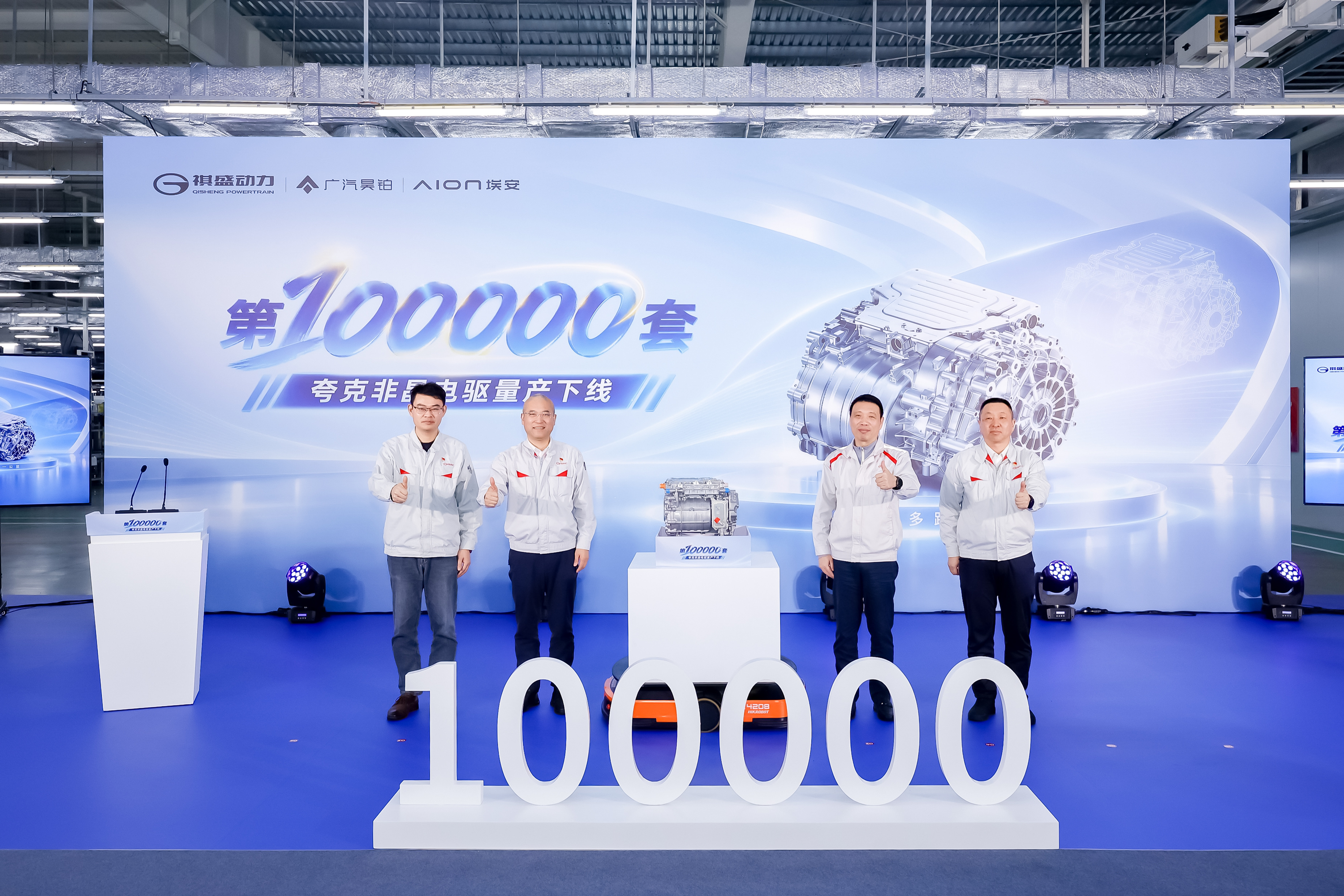
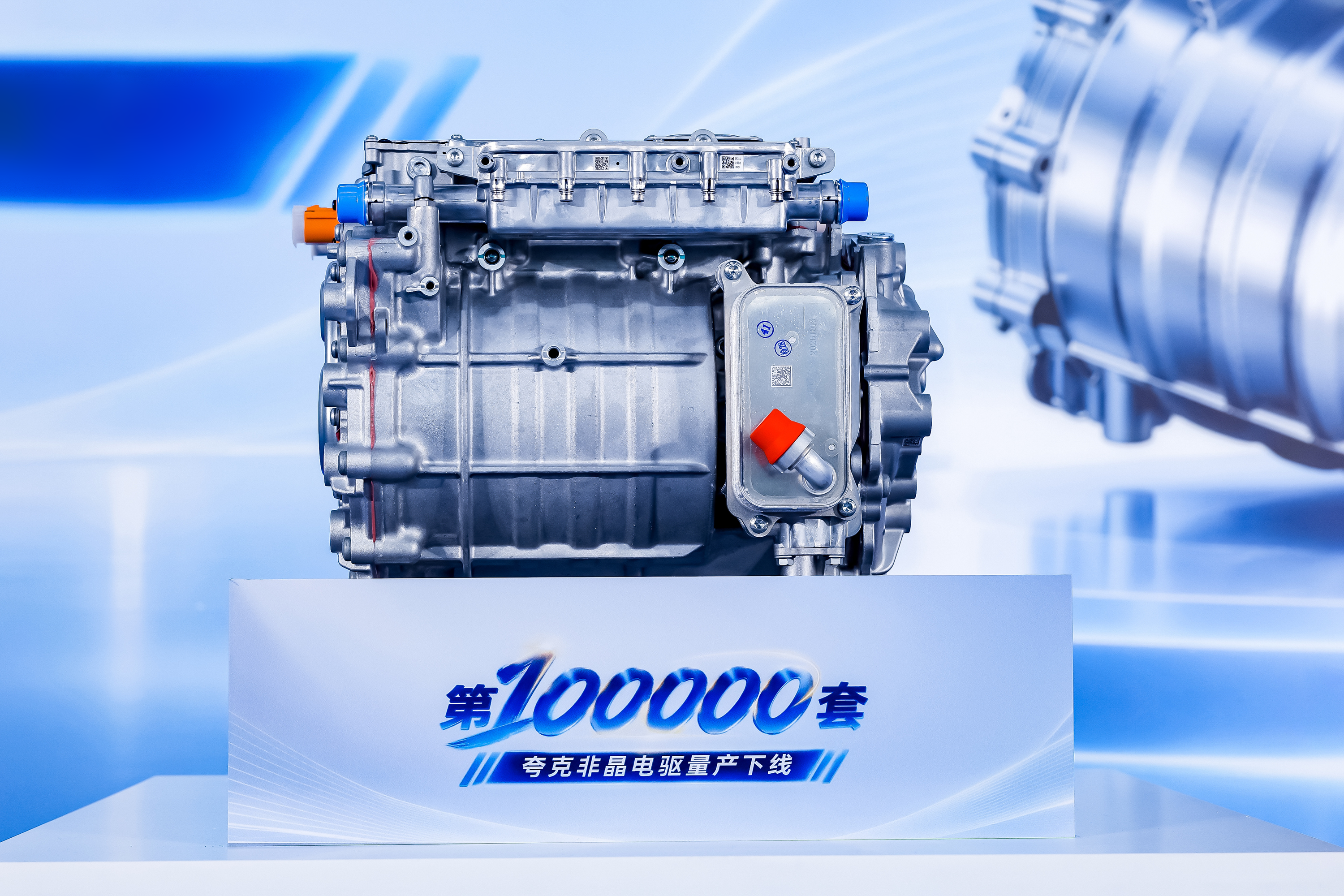
The 100,000th unit of the Quark Amorphous Alloy-Carbon Fiber Electric Drive Rolls Off the Production Line
100,000 Units Produced: From Technological Innovation to Validation at Scale
The electric drive system determines an EV's energy consumption, performance and ride quality. Amorphous alloy has long been regarded by the industry as an ideal material for improving electric drive efficiency, thanks to its low core loss and high magnetic permeability. However, the material is hard and brittle, its strips are extremely thin, and the manufacturing process allows very little margin for error, making large-scale production highly challenging. As a result, its application has long remained at the laboratory stage.
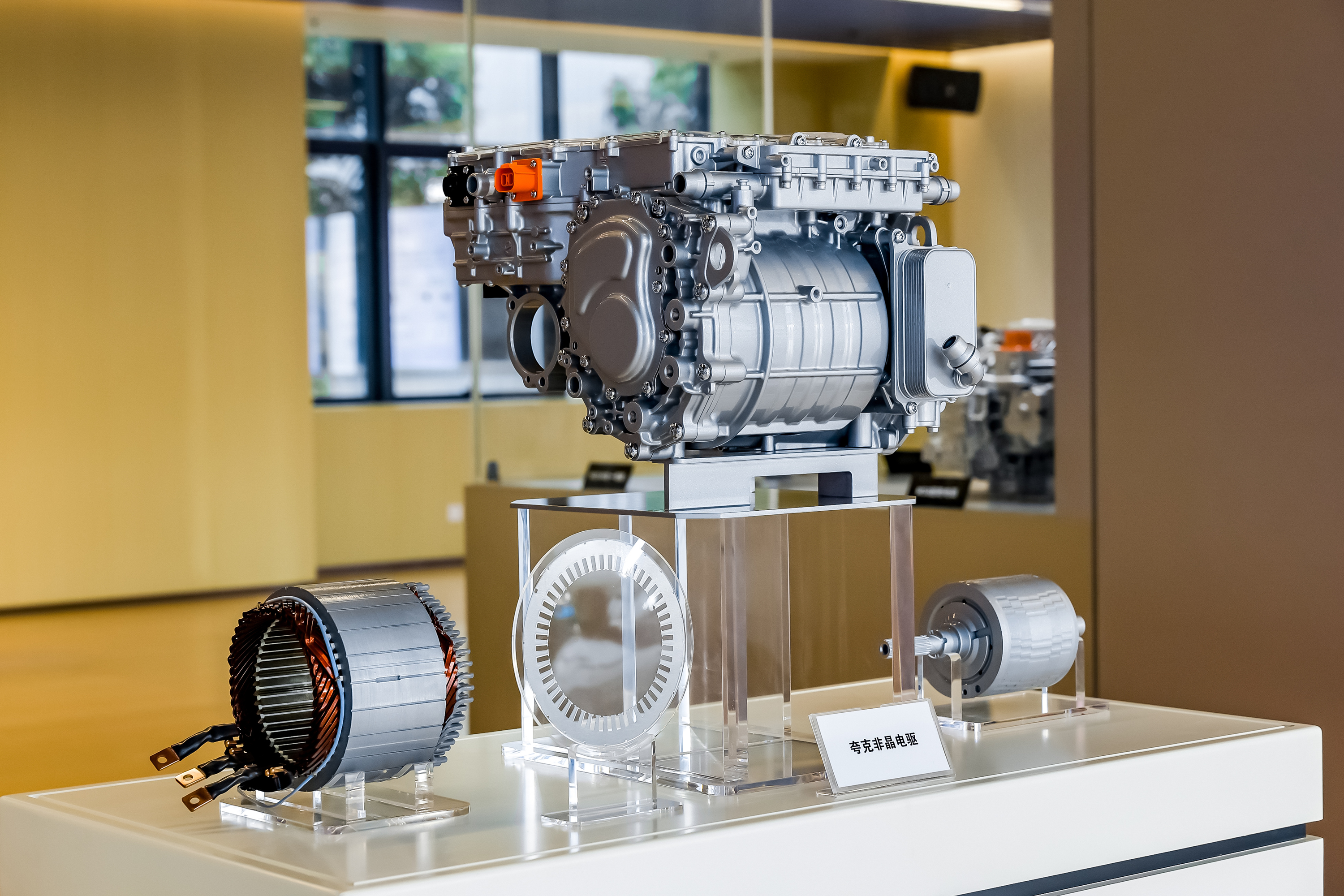
Quark 2.0 Amorphous Alloy-Carbon Fiber Electric Drive
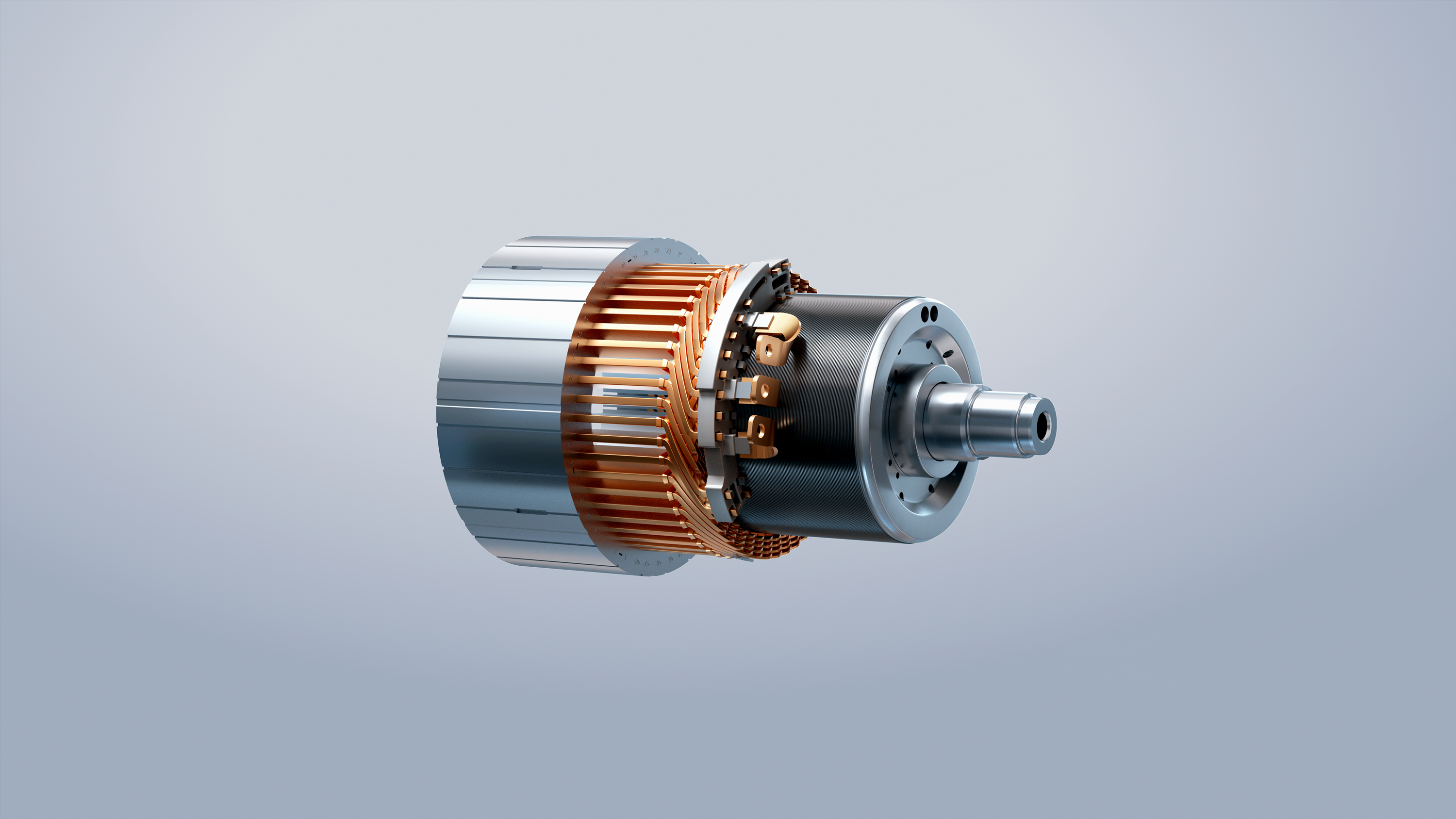
Exploded View of the Quark Amorphous Alloy-Carbon Fiber Electric Drive Motor, Comprising an Amorphous Alloy Stator and a High-Speed Carbon Fiber Rotor
To this end, GAC's in-house powertrain R&D team, a National Outstanding Engineer Team, tackled technical challenges across the entire development process, covering materials, processes, structure and control. It pioneered Mass-Production Process for Amorphous Alloy Stator and achieved breakthroughs in Key Technologies for High-Speed Carbon Fiber Rotor, transforming Amorphous Alloy-Carbon Fiber Electric Drive Technology from a research achievement into an automotive-grade product ready for volume delivery. The 100,000th unit rolling off the line means the technology's performance, manufacturing consistency and volume delivery capability have all been validated at scale.
Dual Breakthroughs in Materials and Processes Deliver High Efficiency and High Power Density
The key breakthroughs of the Quark Amorphous Alloy-Carbon Fiber Electric Drive 2.0 lie in both the stator and the rotor. The stator uses 0.025 mm-thick amorphous alloy strips, roughly one-fifth the thickness of conventional ultra-thin silicon steel sheets; the amorphous alloy's magnetic permeability reaches 20 to 100 times that of ordinary silicon steel, with specific core loss as low as 5.7 W/kg, about 50% lower than ultra-thin silicon steel. To achieve automotive-grade mass production, GAC has developed an integrated manufacturing process covering bonding, stamping and lamination, with the amorphous alloy core reaching 3,800 laminated layers.
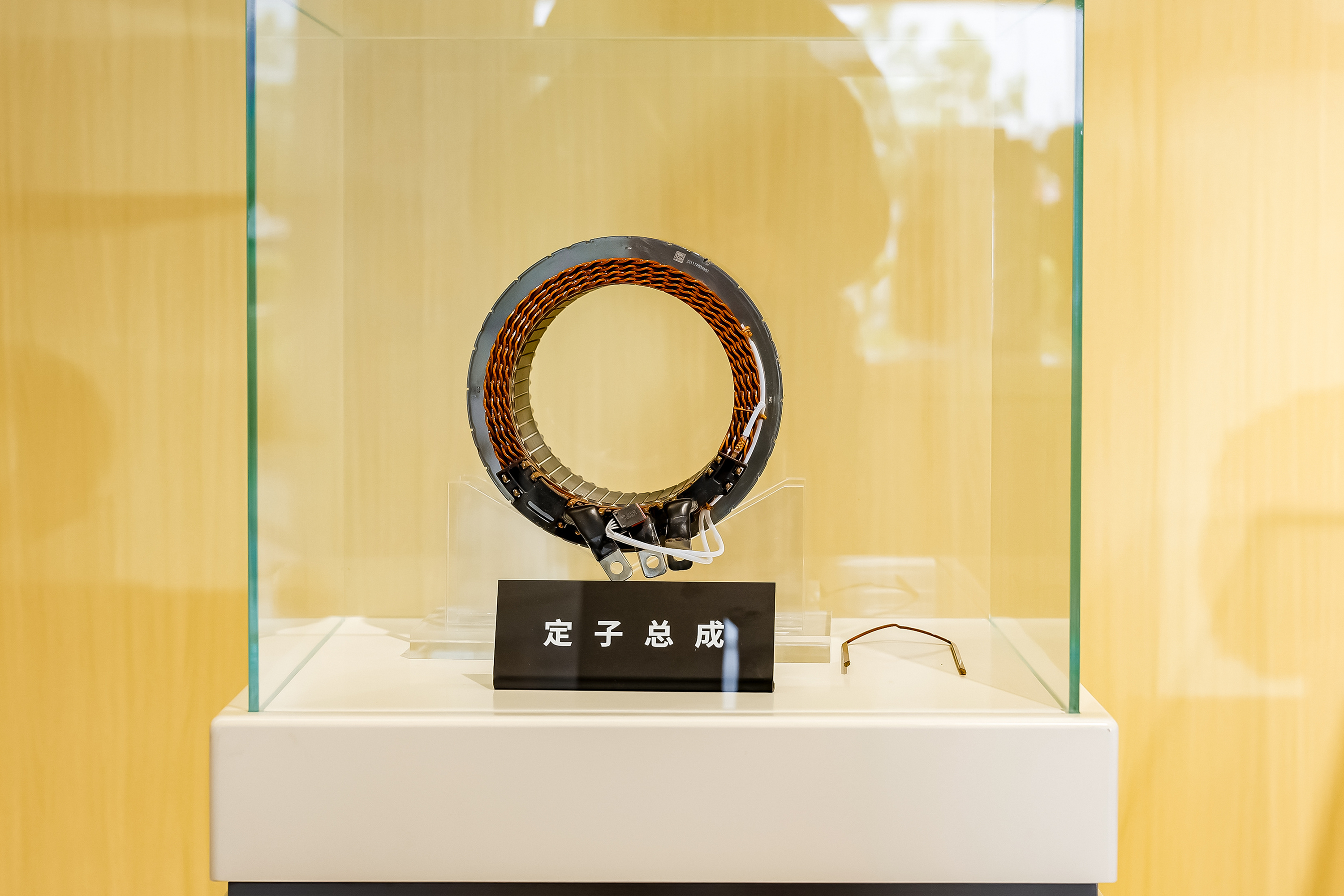
Amorphous Alloy Stator of the Quark Amorphous Alloy-Carbon Fiber Electric Drive 2.0
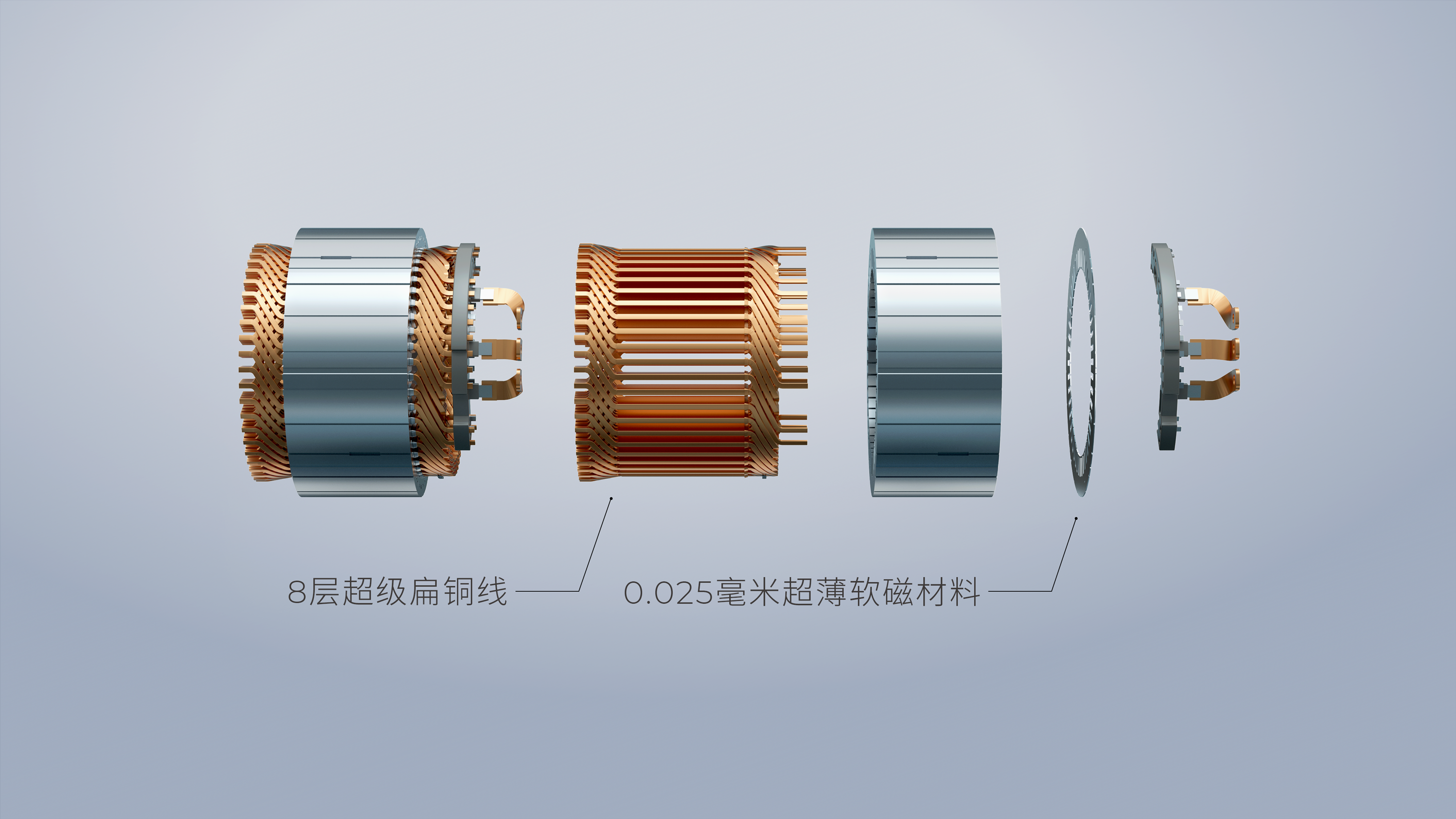
Exploded View of the Amorphous Alloy Stator, Comprising Eight Layers of Super-Flat Copper Wire, 0.025 mm-Thick Ultra-Thin Soft Magnetic Material, and Other Components
The rotor adopts an integrated carbon fiber winding and curing reinforcement process, replacing the traditional metal sleeve with a 1 mm carbon fiber sleeve to achieve both lightweight construction and high strength, enabling a maximum motor speed of 30,000 rpm. Through the coordinated optimization of materials, structure, integration and motor control, the motor achieves a peak efficiency of 99.03%, while the electric drive system achieves an efficiency of 94.184% under the CLTC cycle, as certified by the China Automotive Technology and Research Center. On a 1,000 V platform, the motor achieves a power density of 17.29 kW/kg, placing it among the industry leaders.
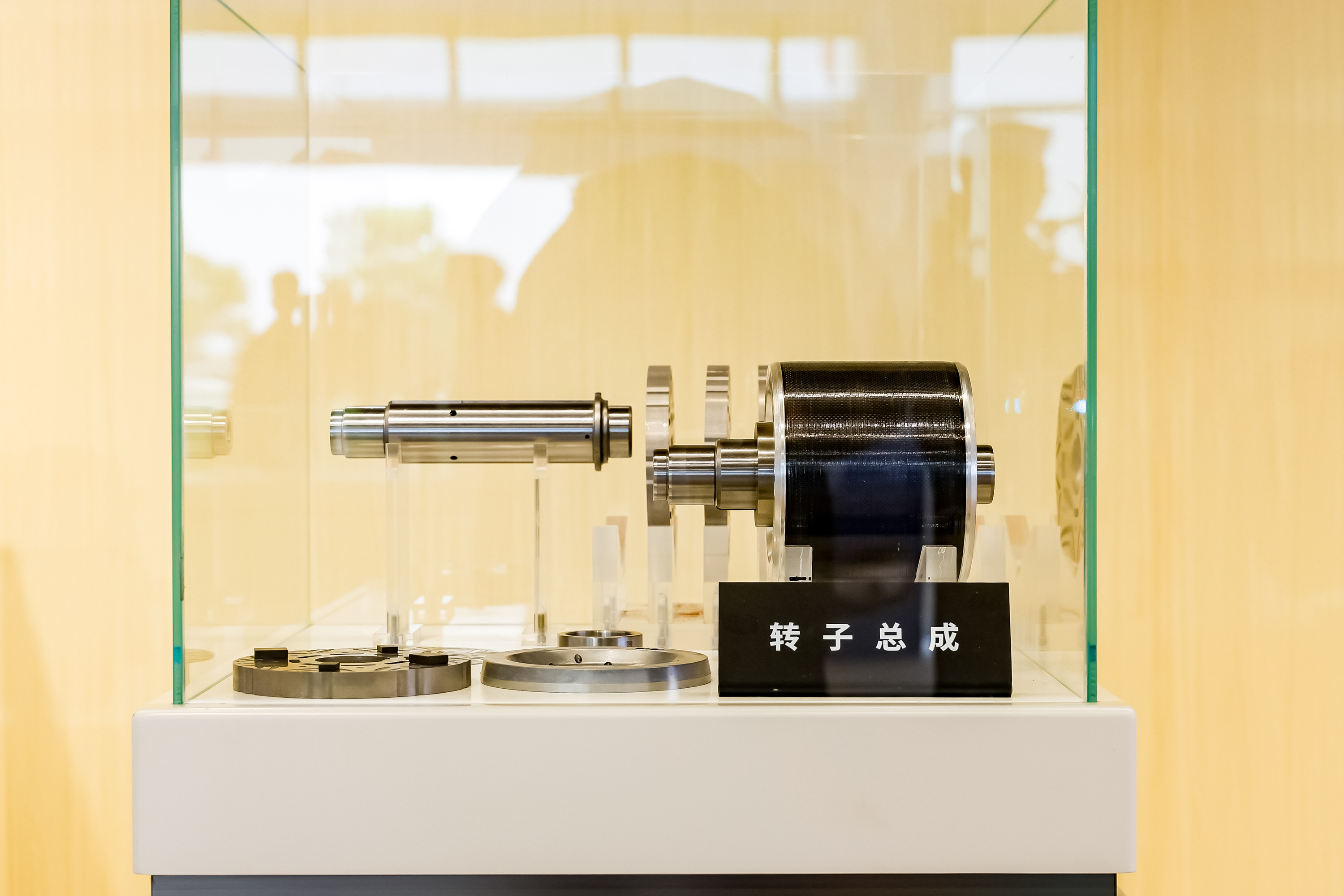
Carbon Fiber Rotor of the Quark Amorphous Alloy-Carbon Fiber Electric Drive 2.0
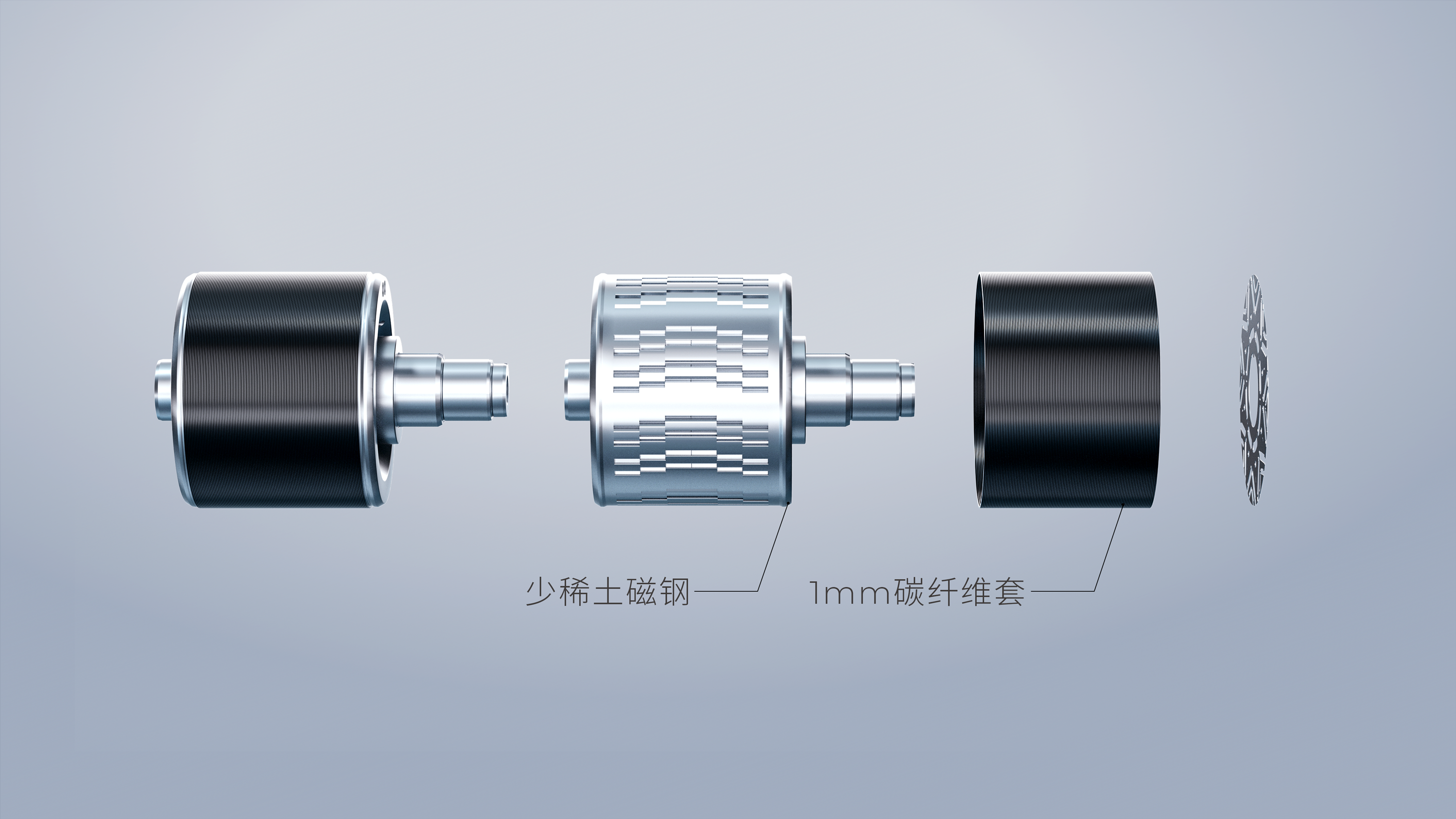
Exploded view of the carbon fiber rotor, comprising a 1 mm carbon fiber sleeve, low-rare-earth magnets and other components
Meanwhile, the Quark Amorphous Alloy-Carbon Fiber Electric Drive 2.0 integrates 12 components, including the motor, motor controller, reduction gearbox, on-board charger and power management system, into a single unit, with a total assembly weight of only 59 kg. The silicon carbide (SiC) power module reduces controller losses by 71.6% compared with conventional silicon-based IGBTs. Combined with GAC's in-house E-drive 2.0 control algorithm, it further improves drive efficiency by more than 2%.
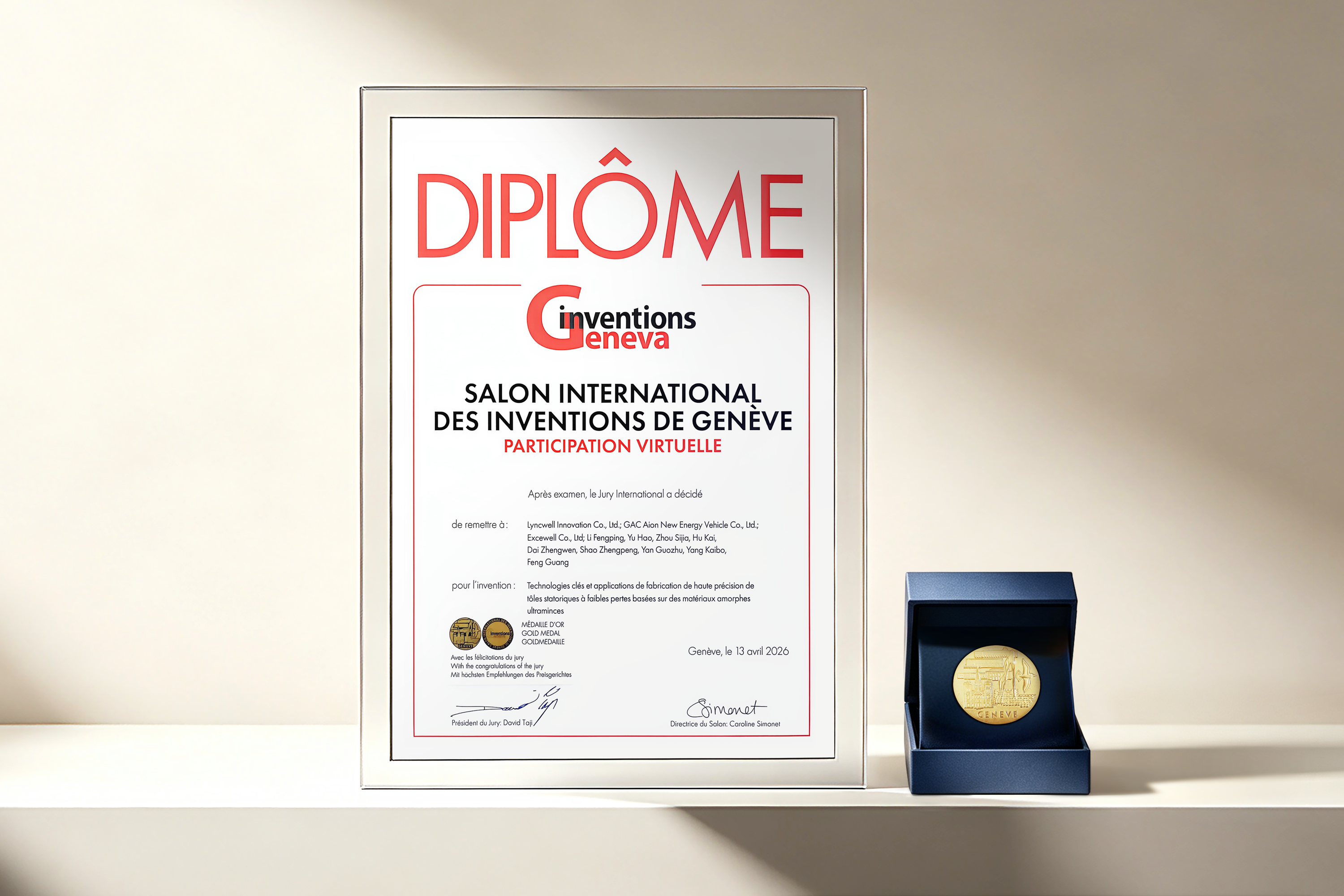
The Precision Manufacturing Technology for Amorphous Alloy Stators wins the Gold Medal with Jury Congratulations at the International Exhibition of Inventions Geneva
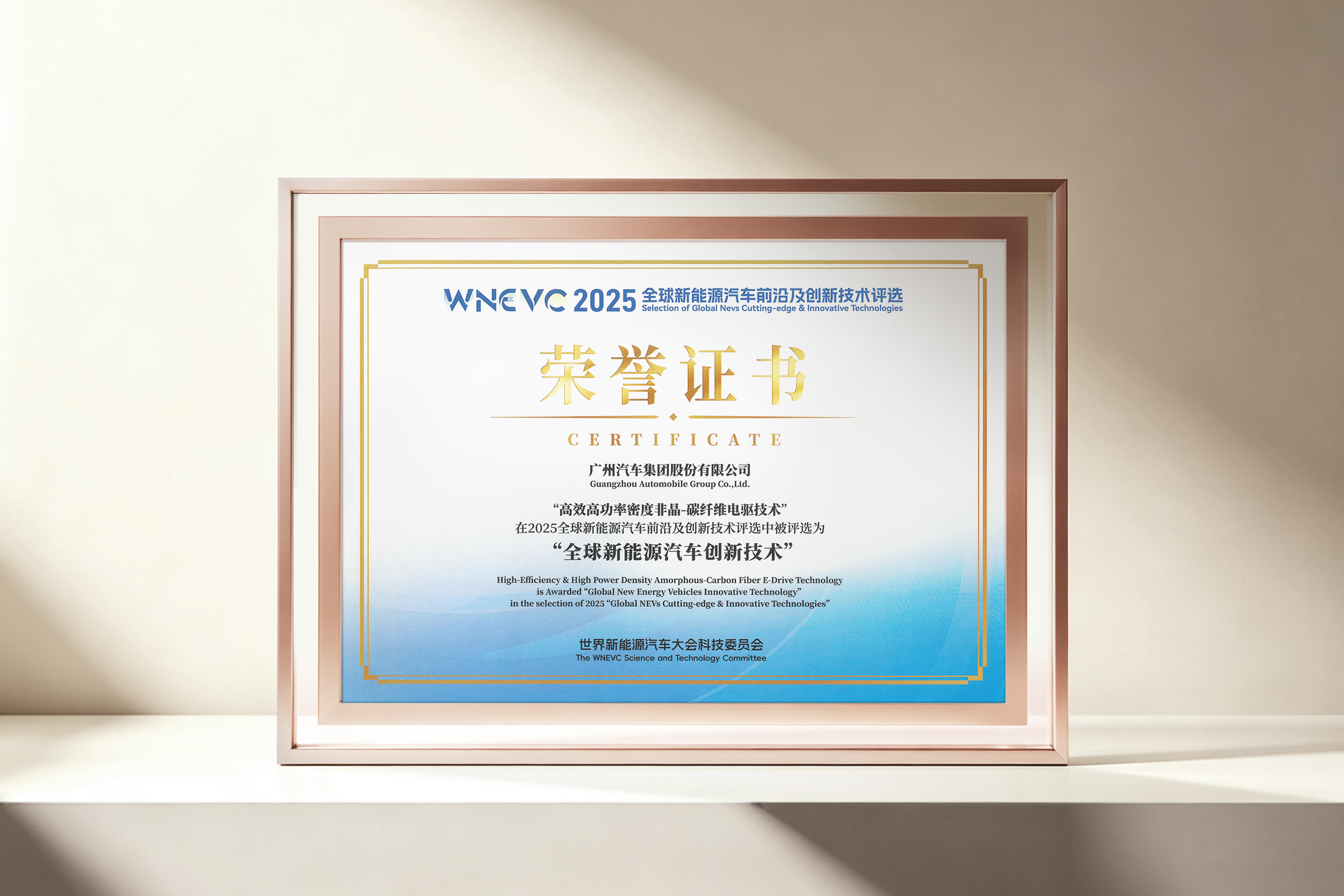
High-Efficiency & High Power Density Amorphous Alloy-Carbon Fiber Electric Drive Technology is named one of the 2025 Global New Energy Vehicles Innovative Technologies
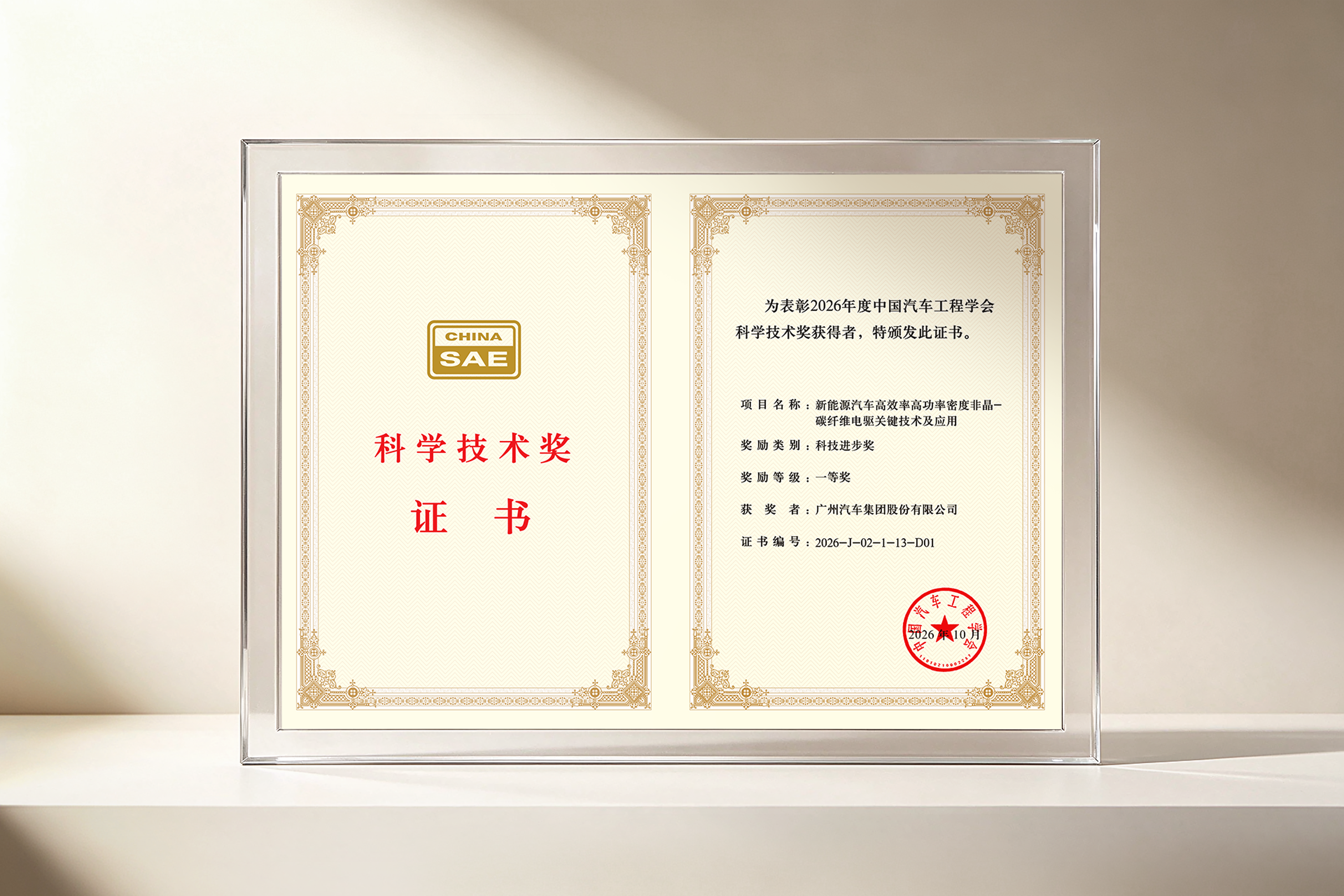
The technology wins first prize in the 2026 Science and Technology Progress Award of the China Society of Automotive Engineers
Widespread Deployment Across Multiple Models, Turning Technical Advantages into User Value
The value of technological innovation must ultimately be reflected in everyday use. The Quark Electric Drive 2.0 Amorphous Alloy-Carbon Fiber Electric Drive is now installed in mass-produced models including the AION N60, the 2027 AION RT and the 2027 AION i60. With battery capacity unchanged, these models achieve a 4% reduction in vehicle energy consumption and a 30–50 km increase in range, delivering one extra kilometer per kilowatt-hour.
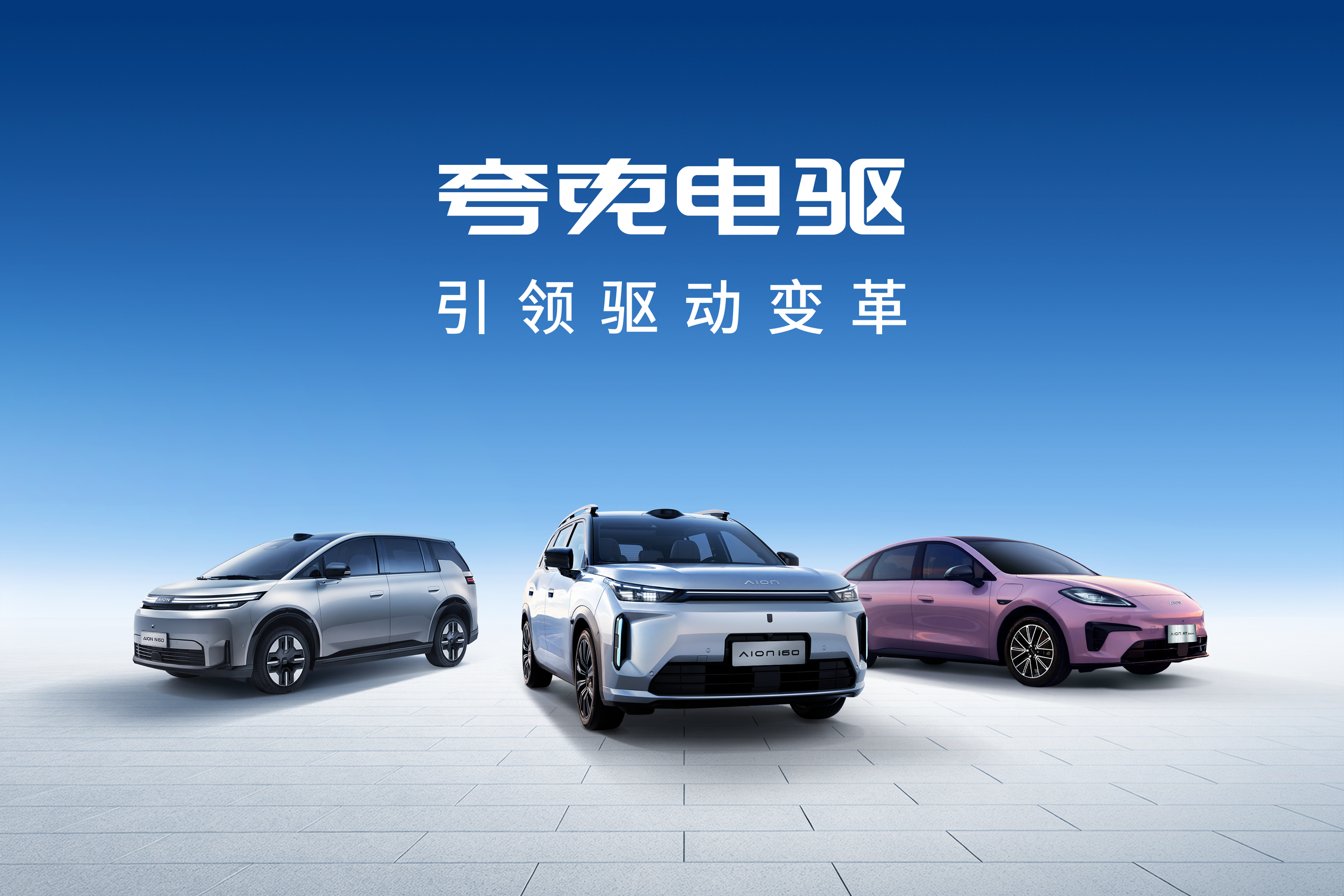
Multiple models equipped with the Quark Electric Drive 2.0 Amorphous Alloy-Carbon Fiber Electric Drive go one extra kilometer per kilowatt-hour
For example, the 2027 AION RT recorded 8.571 kWh/100 km in real-world testing on the Hainan Island Ring Expressway, setting a Guinness World Record for "Lowest energy consumption driving Hainan Island Ring Expressway by a battery electric-powered production saloon/sedan." The battery-electric version of the 2027 AION i60 saw its range rise from 650 km to 700 km without increasing battery capacity. Lower energy consumption, more dependable range and less frequent charging translate the benefits of the high-efficiency electric drive into tangible running-cost savings.
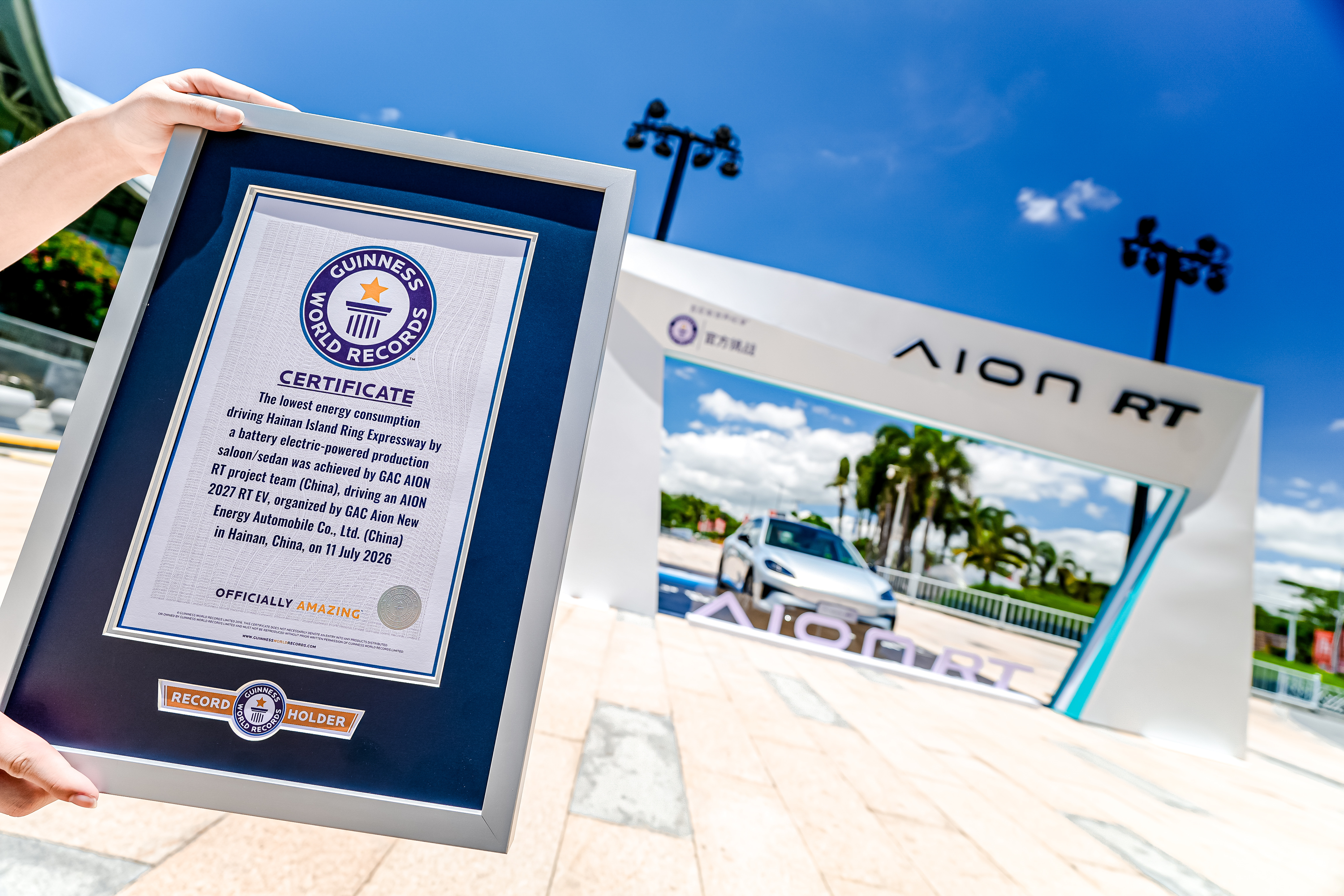
The AION RT sets a Guinness World Record for the lowest energy consumption by a mass-produced battery-electric sedan on the Hainan Island Ring Expressway
The deeply integrated control architecture centrally coordinates power, energy and thermal management, improving coordination between power delivery and energy recovery and turning advanced electric drive technology into tangible benefits in everyday driving.
Since launching in-house R&D on electric drives in 2010, GAC has progressively introduced the world's first mass-produced three-in-one electric drive, Quark Electric Drive 1.0 and Quark Electric Drive 2.0. This development path has taken GAC from system integration to in-house breakthroughs in core materials. The rollout of the 100,000th Amorphous Alloy-Carbon Fiber Electric Drive marks the latest milestone on this path and a new starting point for making advanced technology accessible to all.
Looking ahead, GAC will continue to apply electric drive technologies offering high efficiency, high power density and a high level of safety to models under its own brands, including HYPTEC, AION and AISTALAND. It will also extend the use of amorphous alloys from electric drives to hybrid powertrain products such as hybrid transmissions and range extenders, reducing both vehicle electricity consumption and fuel consumption at low SOC. GAC will also explore applications in motors for intelligent robots and low-altitude aircraft, so its self-developed core powertrain technologies can meet a broader range of mobility needs.