



The holiday season often means long-awaited reunions, extended road trips, and packed highways. Yet winter driving also brings fewer forgiving conditions—slick roads, reduced visibility, fluctuating temperatures, and longer hours behind the wheel. Combined with heavier traffic and tighter schedules, these factors naturally elevate the risks associated with holiday travel.
So, are EV safe to drive in winter for holiday? Electric vehicle safety becomes more than a convenience; it becomes a necessity. This is where GAC’s advanced safety technologies take center stage. Designed to anticipate risks, support driver decision-making, and protect occupants in real-world conditions, GAC’s EV safety elements are built not just for daily commuting, but for every journey that truly matters—especially driving back home for the Christmas and the holidays.

GAC Magazine 2.0 Battery: Staying Safe When Temperatures Drop
Cold weather poses a well-known challenge to electric vehicle performance, particularly to battery systems. Low temperatures can slow electrochemical reactions, reduce energy efficiency, and place additional stress on internal battery components. If not properly managed, these conditions may affect power output, charging stability, and overall driving confidence—exactly when it matters most, such as during long drives back home for Christmas and the holidays, when families are counting on a safe and reliable journey.
To address these risks, GAC has developed the Magazine Battery 2.0 with a clear focus on stability and safety in extreme conditions. At its core is a super-stable electrode interface that maintains consistent internal contact even when temperatures fluctuate, ensuring dependable energy delivery on winter roads. This is reinforced by a super heat-resistant layer within the battery structure, significantly reducing the probability of internal short circuits at the cell level, even under high-load or low-temperature scenarios.
From an engineering standpoint, the Magazine Battery 2.0 delivers a dielectric strength of up to 13.49 kV/mm, providing robust insulation against electrical breakdown. In addition, its nitrogen insulation strength is 2.3 times higher than conventional designs, further enhancing resistance to thermal and electrical instability.
These innovations enable the battery to remain stable, resilient, and predictable, helping ensure that your holiday drive is not only efficient, but fundamentally safe.
MBorad 2.0 & GAC L2++ NDA: Confidence and Protection on Unpredictable Winter Roads
Holiday driving often coincides with some of the most demanding road conditions of the year. Icy surfaces reduce tire grip, longer braking distances increase the likelihood of rear-end collisions, and fog, snow, or early nightfall can significantly limit visibility. In such environments, even experienced drivers may face sudden hazards that leave little time to react, making comprehensive vehicle safety systems essential rather than optional.
GAC addresses these risks through a multi-layered approach to active and passive safety. Core systems such as Anti-lock Braking System (ABS) and Tire Pressure Monitoring System (TPMS) work continuously to enhance vehicle stability, optimize braking control, and alert drivers to potential tire-related risks before they escalate. Complementing these are GAC’s intelligent driving technologies, which assist with perception, decision-making, and vehicle control, helping drivers navigate complex winter traffic with greater confidence.
At the core of this protection is GAC’s MBoard 2.0, a next-generation platform designed to preserve cabin integrity even in extreme scenarios. Built on a Software Defined Chassis (SDC) concept, MBoard 2.0 achieves this through distributed drive, full-domain integration, and highly integrated control systems. Data elements are used to continuously self-iterate vehicle dynamics, energy management, and digital twin models, enabling the chassis to adapt in real time to road conditions.
The MBoard 2.0 platform plays a critical role in safeguarding occupants when conditions turn severe:
- Its four-wheel corner module self-driving capability allows each wheel to respond independently, improving traction control and vehicle balance on slippery roads.
- The zero-pipeline ultimate chassis integration minimizes response delays between sensing, computing, and actuation, ensuring faster and more precise vehicle reactions.
- Most importantly, the cabin-drive separation architecture—integrating mechanical, digital, and energy systems—helps preserve cabin integrity by isolating occupants from external impacts and system stresses.
These form a robust safety foundation, designed to protect passengers and maintain structural resilience, even in the most challenging holiday driving environments.
In addition, GAC further enhances holiday driving safety with its L2++ Navigation Driving Assistance System (NDA), designed to reduce driver workload during long-distance travel.
- Equipped with 31 intelligent perception sensors—including a high-precision 100-line LiDAR and an 8-megapixel camera—the system builds a comprehensive, real-time understanding of the surrounding environment.
- Based on a preset navigation route, NDA supports advanced driving assistance functions such as single-lane cruising on main roads and ramps, automatic ramp entry and exit, automatic lane changing and overtaking, as well as proactive obstacle avoidance.
By combining precise perception with intelligent control, GAC’s L2++ NDA helps maintain smooth, predictable driving behavior in complex holiday traffic, allowing drivers to stay focused, less fatigued, and better protected as driving back home for Christmas.
GAC Factory: Safety Starts Long Before the Journey Begins
Vehicle safety is not something added at the final stage—it is built in from the very beginning. At GAC, safety engineering starts at the manufacturing level, where every process is designed to ensure consistency, precision, and reliability. The GAC AION Smart Ecological Factory leverages a global data cloud platform to enable real-time data acquisition, analysis, judgment, and decision-making across production. This intelligent manufacturing system significantly enhances quality control and efficiency, ensuring each vehicle meets rigorous safety standards before it ever reaches the road.
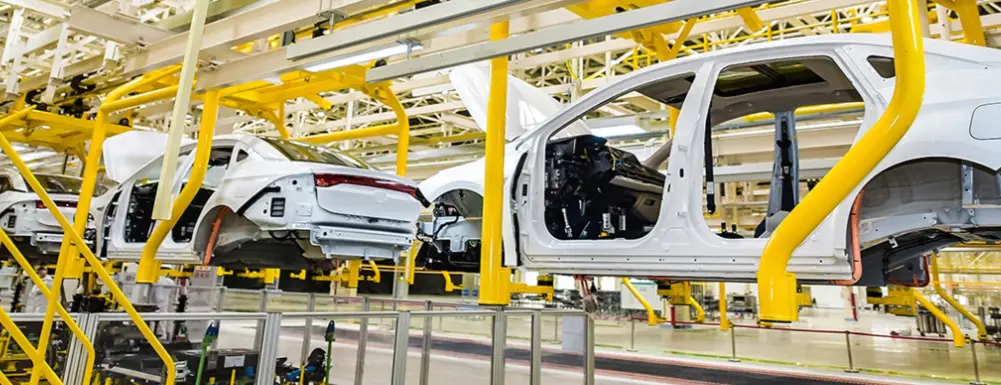
At the same time, the factory is future-ready. To support advanced lightweight vehicle structures without compromising safety, GAC integrates the world’s first aluminum riveting and spot-welding switching technology within a “steel–aluminum hybrid” production line, enabling stronger yet lighter body structures. This is reinforced by GAC’s comprehensive quality management system—built around the “Stop–Call–Wait” and PDCA methodologies and strengthened by the strict “6520” quality control framework—aimed at achieving zero defects across models and platforms.
Together, these measures ensure that every GAC vehicle delivers high safety and quality standards long before it becomes part of a holiday journey home.
Conclusion
Whether it is driving back home for Christmas, heading out for a year-end holiday, or returning after a long reunion with family, the journey itself is just as important as the destination. From winter-ready battery safety and intelligent chassis systems to advanced driving assistance and stringent manufacturing standards, GAC integrates safety into every layer of the vehicle—so drivers can face seasonal challenges with confidence.
As roads grow busier and conditions more demanding during the holiday season, GAC’s technologies are designed to support what truly matters: getting you home safely.
Wherever you are driving back home for Christmas or having a trip to explore the place you’ve never been on the holidays, GAC wishes you peace of mind on the road, joyful reunions, and a safe, happy holiday season with the people you love.