


.png)
The electric vehicle market is expanding quickly. In 2025, global electric car sales exceeded 20 million — surpassing one quarter of all new car sales worldwide.[1] Yet today’s battery technology still constrains range, charging speed, safety, and cost. To unlock the next stage of EV adoption, the industry needs a major leap forward. That is why all-solid-state batteries matter so much.
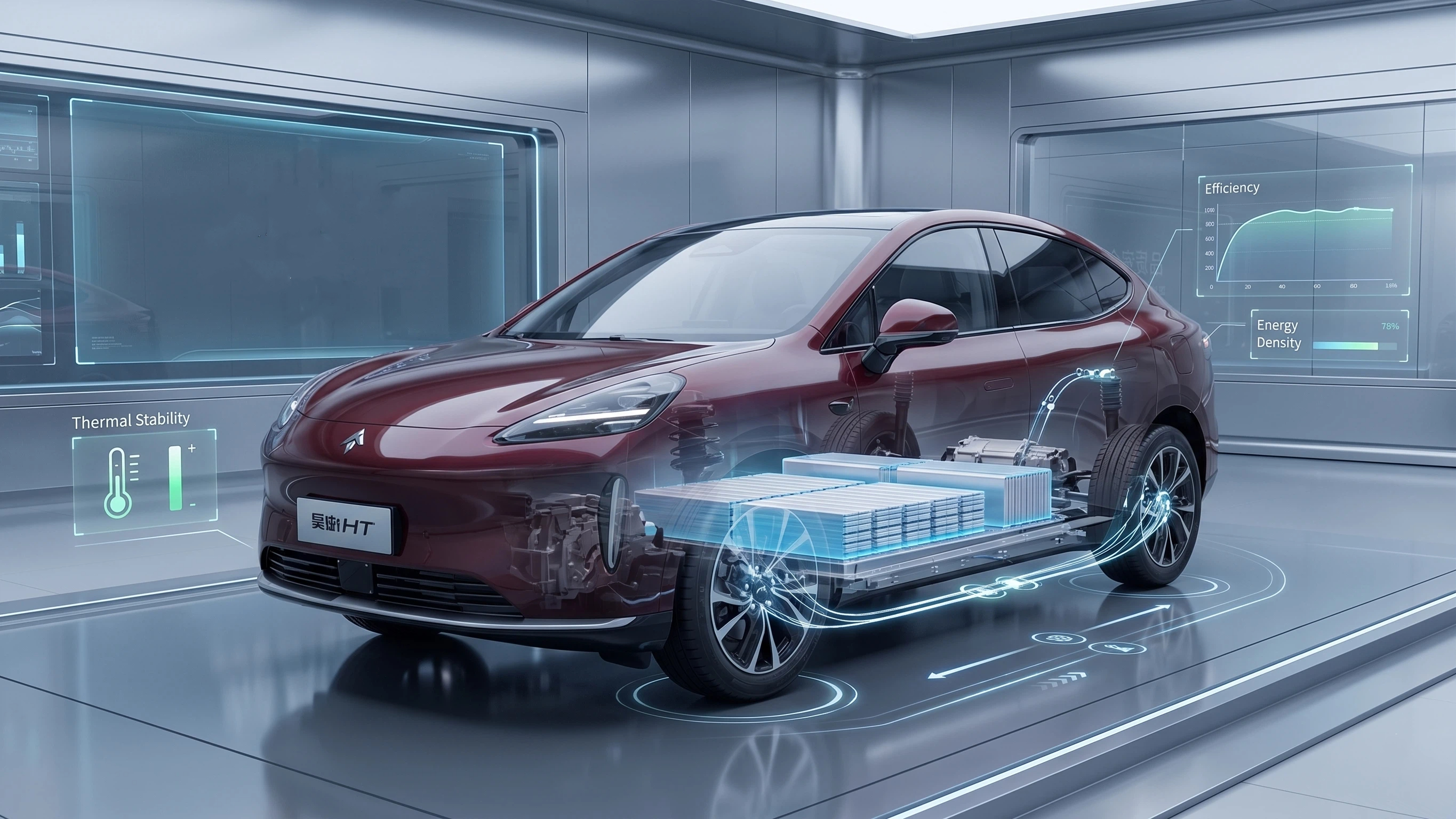
The Essentials of All-Solid-State Batteries
An all-solid-state battery (ASSB) is a type of rechargeable battery that replaces the liquid or gel electrolyte found in conventional lithium-ion cells with a solid material. That solid electrolyte can be made from ceramics, glass, polymers, or sulfide-based compounds. Everything inside the cell — the anode, cathode, and electrolyte — is in a solid state.
This is not a minor material change. It reshapes how the battery stores and transfers energy, and it has major implications for safety, durability, and energy density.
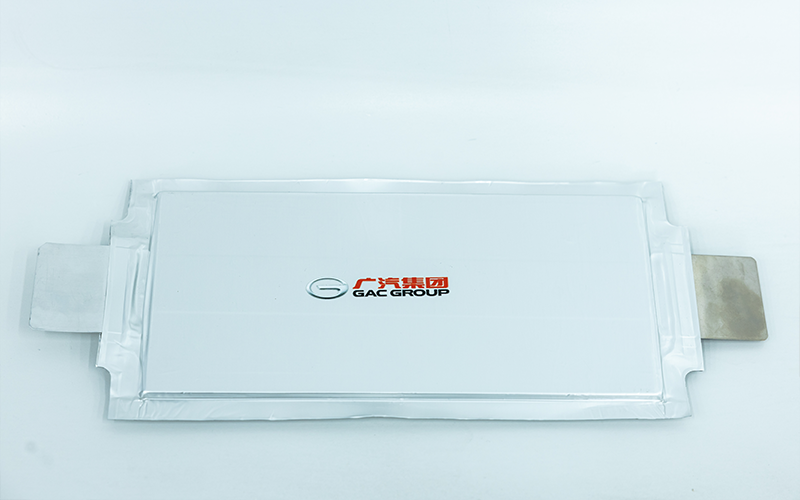
GAC all-solid-state battery
How Do They Work?
Like any battery, an all-solid-state battery works by moving lithium ions between two electrodes. During charging, ions travel from the cathode to the anode through the electrolyte. During discharge, they move back, generating an electrical current. The fundamental process is the same as in any lithium-ion battery — but the material through which those ions travel makes all the difference.
The key difference is the medium those ions travel through. In conventional cells, the ions move through a liquid. In an all-solid-state battery, they pass through a dense solid layer that is more resistant to physical damage, does not evaporate, and is less prone to the kinds of side reactions that can occur in liquid systems.
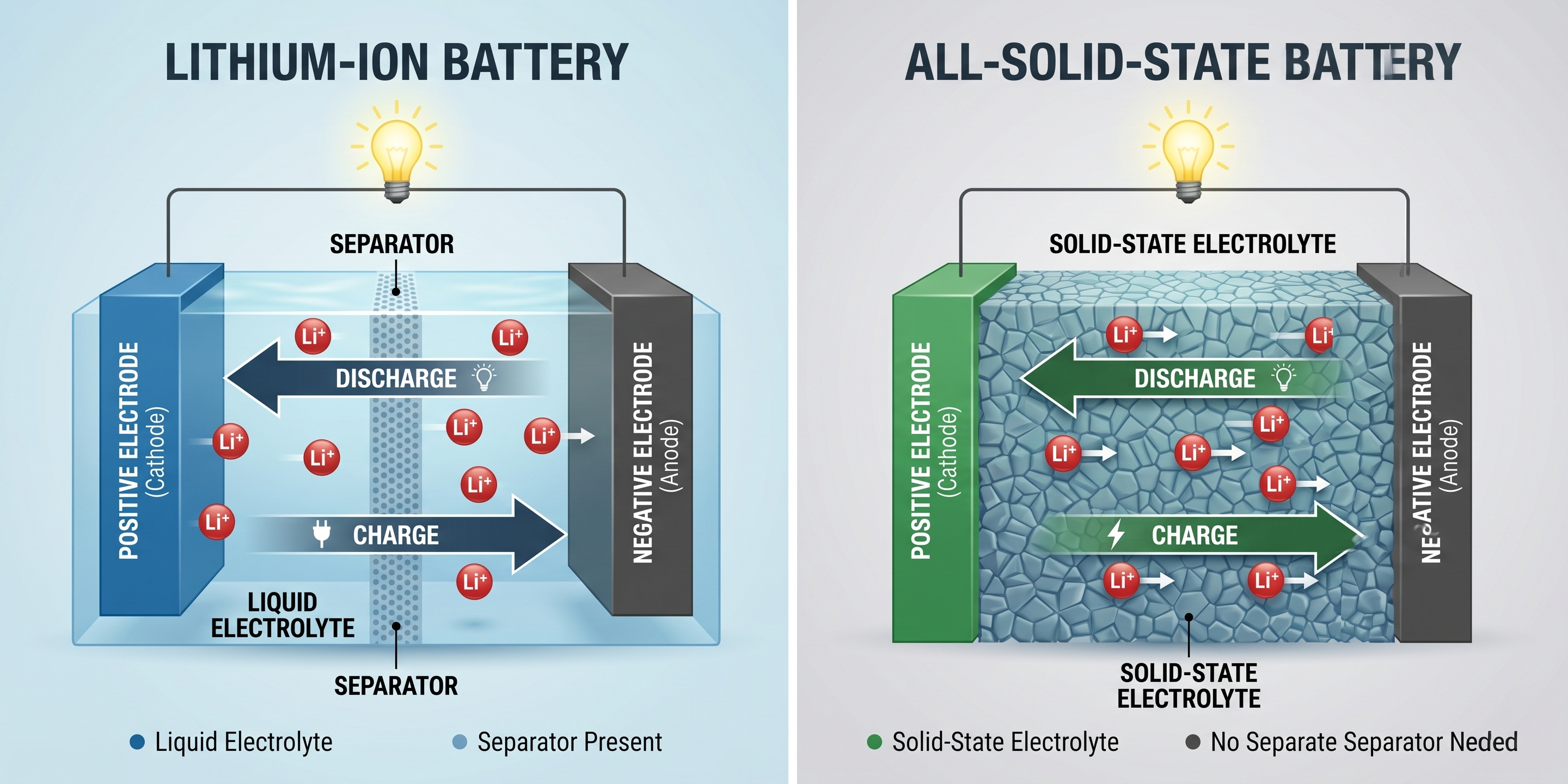
Liquid vs. Solid Electrolyte: What's the Difference?
The electrolyte is the bridge between the two electrodes. Without it, ions cannot move, and the battery cannot function. In today's lithium-ion batteries, the electrolyte is a liquid solution — typically a lithium salt dissolved in an organic solvent. It works well under normal conditions, but it comes with trade-offs.
Liquid electrolytes are flammable, can leak, and tend to degrade over time, especially under high heat or fast-charging stress. Those limitations are one reason conventional batteries face hard ceilings in performance and safety.
Solid electrolytes reduce several of those risks. They do not leak, they do not evaporate, and many are non-flammable, which makes them especially attractive for future EV applications.
Here is a cleaner comparison between liquid and solid electrolytes:
|
Feature |
Liquid Electrolyte (Conventional) |
Solid Electrolyte (All-Solid-State) |
|
Flammability |
High (organic solvents) |
Low to none |
|
Leakage risk |
Yes |
No |
|
Energy density potential |
Moderate |
High |
|
Temperature range |
Narrow |
Wider |
|
Electrode compatibility |
Limited (lithium metal is difficult) |
Better suited for lithium metal anodes |
|
Durability / cycle life |
Moderate |
Potentially longer |
|
Manufacturing complexity |
Mature and established |
Still scaling |
|
Cost |
Lower (current) |
Higher (current) |
Why Solid-State Batteries Improve Safety
One of the most serious risks with conventional lithium-ion batteries is thermal runaway. This is a chain reaction where heat from one cell causes neighboring cells to overheat and fail. It can result in fire or explosion. The liquid electrolyte is the primary fuel for this reaction.
Organic solvents used in liquid electrolytes ignite at relatively low temperatures. When a battery is punctured, overcharged, or exposed to extreme heat, the liquid can vaporize and combust. This is a known and persistent challenge for EV safety worldwide.
How Solid Electrolytes Solve This
Solid electrolytes address thermal runaway at its root.
- Non-flammable and thermally stable
Most solid electrolyte materials, especially ceramics and sulfide compounds, are far less likely to combust than liquid organic solvents. That improves thermal resilience at the cell level.
- No leakage or gas formation
Because there is no liquid, there is nothing to spill or evaporate. Conventional cells can generate gas under stress, causing swelling and rupture. Solid cells do not have this problem.
- Solid layer as both electrolyte and barrier
The solid electrolyte acts as a physical separator between the anode and cathode. It prevents dendrite growth — the tiny lithium spikes that can pierce a liquid separator and cause short circuits. In an all-solid-state battery, that physical barrier is far more robust.
Together, these properties make all-solid-state batteries a fundamentally safer platform for electric vehicles.
Why They Can Enable Higher Energy Density
Energy density measures how much energy a battery can store relative to its weight (Wh/kg) or volume (Wh/L). Higher energy density means more power stored in a smaller, lighter package. For EVs, this translates directly to longer range without adding weight.
Today’s best lithium-ion batteries are commonly cited at around 250 to 300 Wh/kg at the cell level, while solid-state designs are being developed to push beyond that range. The promise is not just incremental improvement; it is a step-change in what battery packs can deliver.
How Solid-State Enables Greater Density
The all-solid-state battery can support design choices that liquid-based cells simply cannot.
- Lithium metal anodes
Liquid electrolytes react poorly with lithium metal, so conventional batteries usually rely on graphite. Graphite is stable, but it stores less energy. Solid electrolytes are more compatible with lithium metal, which unlocks much higher anode capacity.
- Thinner separators
Liquid-based cells require a porous separator soaked in electrolyte, which adds bulk. A solid electrolyte layer is thinner and serves the same function, saving space.
- More compact cell designs
Without the need to contain a liquid, engineers can design cells in new shapes and form factors. Cells can be stacked more efficiently, increasing the energy you can fit into a given space.
Taken together, these factors make all-solid-state batteries a strong candidate for higher energy density than today's mainstream lithium-ion systems.
Why This Matters for Electric Vehicles
This technology brings massive, real-world benefits to drivers everywhere. Using solid-state batteries for electric vehicles unlocks an entirely new level of automotive performance.
- Longer range
Higher energy density means an EV can travel farther on a single charge. For many buyers, range anxiety is still a barrier to adoption. A solid-state battery EV with a dramatically longer range removes that concern.
- Improved safety
As described above, removing flammable liquid electrolytes reduces the risk of fire. For consumers and regulators alike, this is a critical advantage of solid-state batteries for electric vehicles.
- Faster charging potential
Solid electrolytes are more compatible with high charge rates. Lithium metal anodes can accept charge more quickly and without the same degradation risks. This means future EVs could charge significantly faster than today’s models.
- More durable battery systems
Liquid electrolytes degrade with cycling. Solid electrolytes are more chemically stable over time. This can lead to batteries that retain their capacity through more charge-discharge cycles, extending the useful life of the vehicle.
- New design possibilities
When the battery does not contain liquid, designers have more freedom. Cells can be thinner, shaped differently, or distributed across the vehicle in new ways. This opens possibilities for how EVs are engineered and styled.

Challenges That Still Need Solving
The potential of this technology is huge. However, mass-producing an all-solid-state battery remains very difficult, mainly due to:
- Manufacturing complexity
Producing solid electrolyte materials at an automotive scale requires very high precision, and the processes are still maturing.
- Cost of materials
Solid electrolyte materials, especially sulfide-based compounds and lithium metal, remain expensive compared with the materials used in standard lithium-ion batteries.
- Interface stability and scalability
The boundary between the solid electrolyte and the electrodes is one of the most sensitive parts of the cell. Over time, microscopic changes there can reduce performance, and controlling that effect at scale remains a major research challenge.
None of these challenges is insurmountable. But they require serious, sustained investment and innovation. That is exactly what we at GAC have been committed to since we began researching this technology in 2014.
How Is GAC Exploring All-Solid-State Battery Technology?
At GAC, we have been developing solid-state battery technology for nearly a decade and are now translating that research into practical progress. Our GAC solid-state batteries have the following benefits:
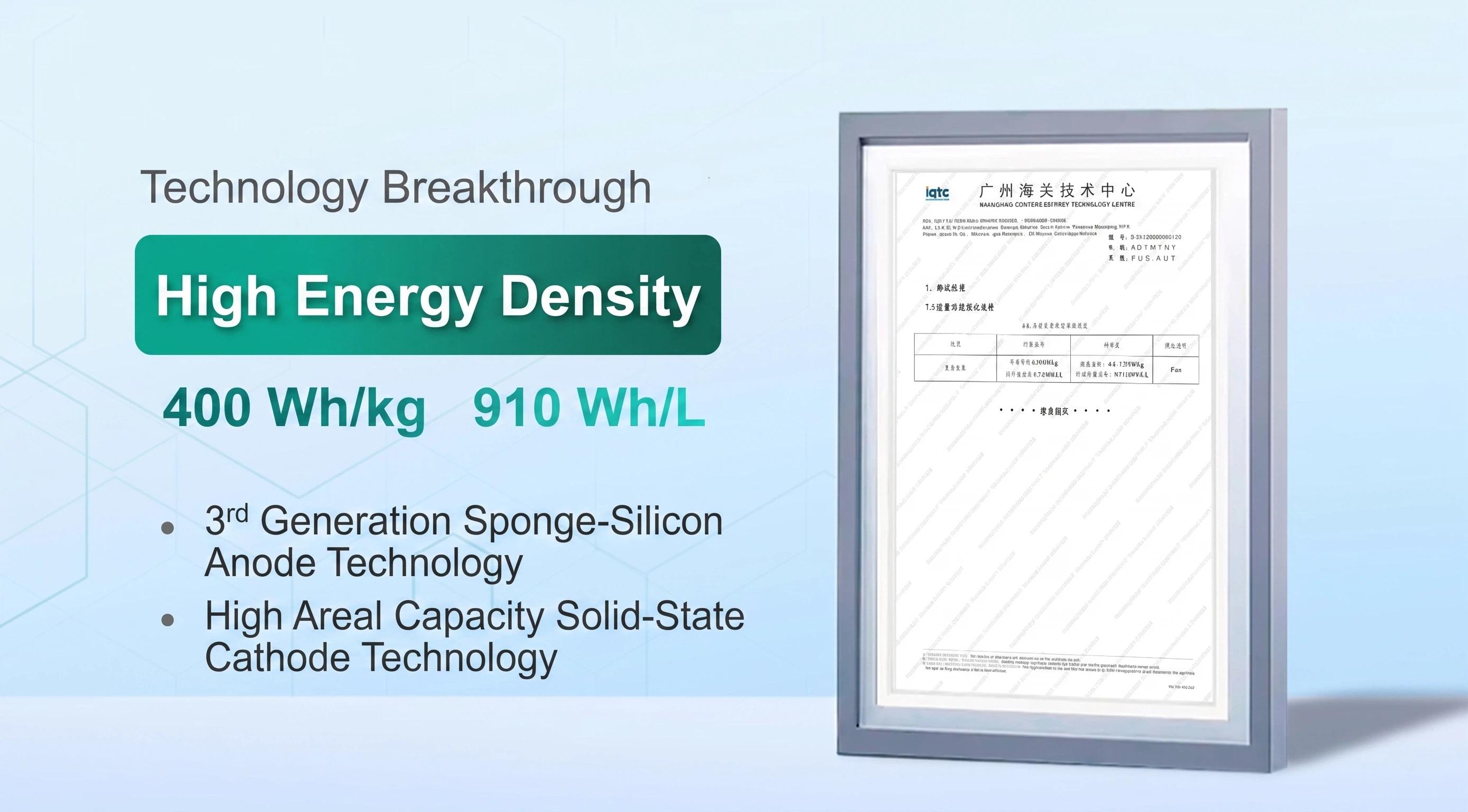
- Ultra-high energy density: Achieves over 400Wh/kg through third-generation sponge silicon anodes (reversible capacity 4x that of graphite, with 135% better cycle stability) and high areal-capacity cathodes (over 5 mAh/cm²), enabling >1,000 km range.
- Intrinsic safety at the cell level: Passes industry-leading tests like nail penetration, cutting, and 200°C thermal box experiments without thermal runaway; high-strength composite solid electrolyte membrane provides mechanical stability and non-flammability.
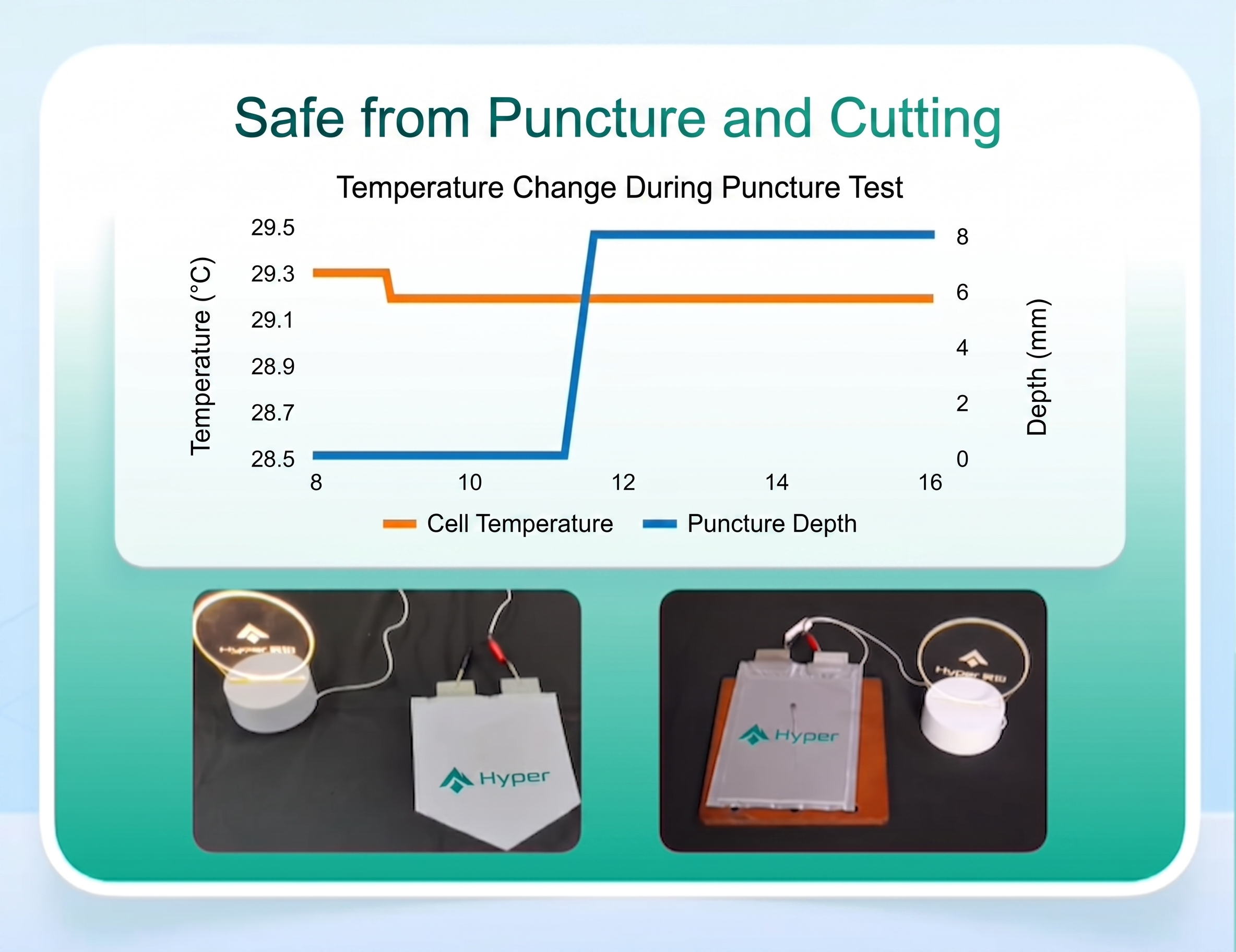
- Manufacturing breakthroughs: Full-process production unlocked (dry electrode, thin electrolyte transfer, in-situ interface fusion); reduces equipment investment by 15%, factory space by 40%, and costs by >35% at scale.
These innovations are no longer confined to the lab. In 2025, we had already moved all our solid-state batteries from the laboratory to pilot production, with automotive-grade solid-state cells producing capacities above 60 Ah. Most importantly, we plan to introduce our solid-state battery EV technology to production vehicles this year, beginning with models under our premium Hyper brand. The Hyper brand was built to push the boundaries of what electric vehicles can be. The all-solid-state battery is the next major step in that mission.
.png)
Looking ahead, GAC will continue to embody our “Where Craft Meets Technology” philosophy—tackling the core challenges of new energy vehicles head-on to drive sustainable, high-quality growth across the industry. Stay tuned for the exciting debut of our next-generation Hyper models, powered by this groundbreaking all-solid-state battery technology.
References
- Global EV Market Outlook 2026 to 2030. https://medium.com/chain4-energy/global-ev-market-outlook-2026-to-2030-05dd841c8cb9