



Key Takeaway
|
Australians camp more than almost anyone. In the year ending December 2025, Australians took 17.3 million caravan and camping trips across the country, and almost one in every seven domestic overnight trips was a caravan or camping trip¹. Many of the best places to pitch up sit a long way from the nearest town — Australia has hundreds of national parks, and the most rewarding sites are often unpowered, off-grid spots where there is no socket to plug into.
That leaves campers with a familiar problem: how do you keep a fridge cold, lights on, and devices charged when the campsite has no power? The traditional answer is a petrol generator — but it is heavy, noisy, needs its own fuel, and breaks the quiet that drew you out there in the first place. The other common approach, a portable power station or solar setup, helps but can run short on a multi-day trip.
This is where vehicle-to-load (V2L) offers a better solution. V2L lets an electric or plug-in hybrid car send power out to your appliances, so the EV itself works like a large, quiet generator — without the fumes, the noise, or a separate tank of fuel. Drive to your site, plug in, and the EV powers your camp setup.
So, which V2L models on the Australian market are the best vehicles fit for campers?
Best V2L EVs for Australian Camping? GAC AION V vs M8 PHEV
Two GAC models offer V2L in Australia: the fully electric AION V and the plug-in hybrid M8 PHEV.
Both models bring V2L power to the campsite, but they suit different trips — the AION V for shorter, well-serviced camping trips, the M8 PHEV for longer, more remote off-grid runs. The table below compares them side by side.
|
Specification |
GAC AION V |
GAC M8 PHEV (Luxury) |
|
Powertrain |
Battery electric (BEV) |
Plug-in hybrid (PHEV) |
|
Body style |
Mid-size SUV |
Full-size people mover |
|
Seats |
5 |
7 |
|
Driving Range |
510 km (WLTP) |
106 km electric (WLTC) / 1,032 km combined |
|
Battery |
75.26 kWh LFP |
- |
|
V2L output |
Up to 7 kW |
Supported (external power supply for camping) |
|
DC Fast Charging Time (10-80%) |
24 min |
— |
|
Fuel tank |
- |
56L |
|
Best for |
Every day & weekend electric camping |
Remote, long-range off-grid trips |
GAC AION V — Best All-Round EV for Camping
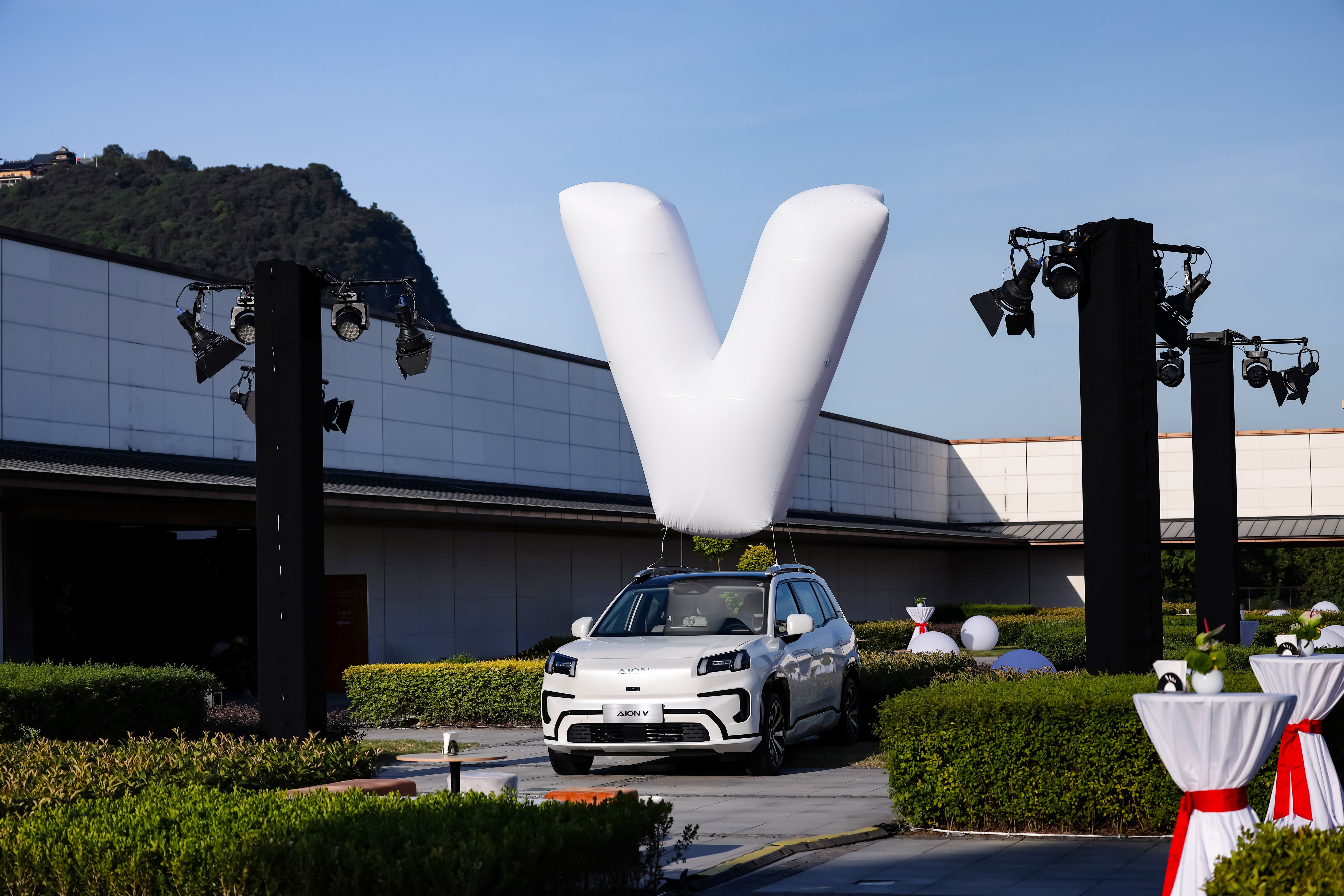
The AION V is GAC's mid-size electric SUV, built to handle both everyday driving and multi-day camping. With V2L on board, it powers your campsite quietly — no generator required.
Can the AION V's V2L power a campsite?
Yes — and this is where the AION V changes how you camp. With up to 7 kW of V2L output, the AION V can meet the power demands of most campsites, running higher-draw appliances such as an induction cooktop, keeping a fridge cold over a multi-day stay, and charging lights, fans, and devices at the same time. The power is drawn directly from the main drive battery, so no separate generator or power station is required.
How far can the AION V travel between charges?
The AION V has a WLTP driving range of 510 km on a full charge — comfortably more than most legs between campgrounds. For regular campers, that means the everyday distances of a trip are easily covered on a single charge. On popular touring routes such as Victoria's Great Ocean Road or the coastal drives around New South Wales, a full charge covers a day's driving with range to spare.
When you do need to top up, DC fast charging takes the battery from 10% to 80% in 24 minutes — about the length of a lunch stop before you're back on the road.
Is the AION V comfortable to camp in?
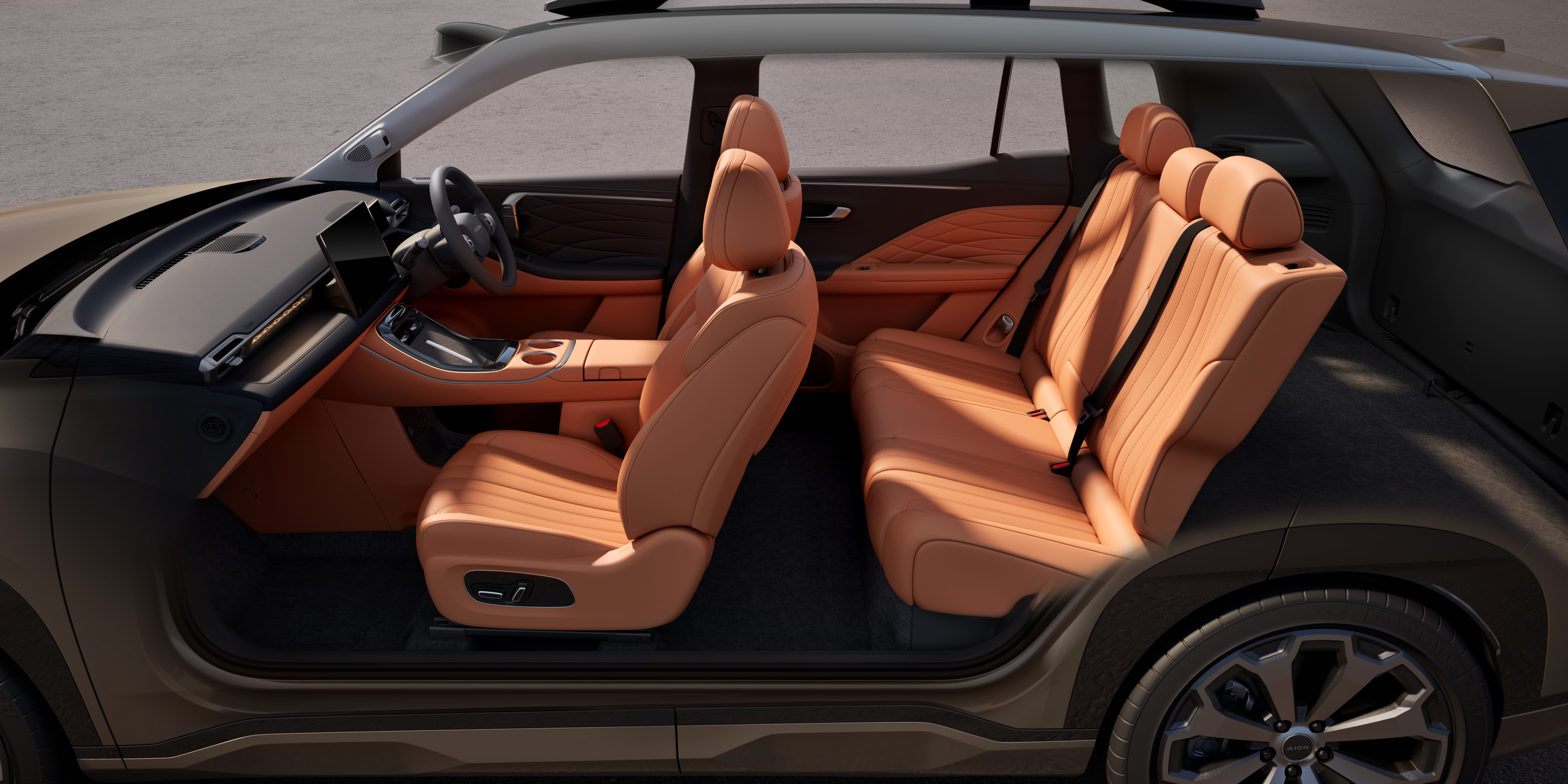
Yes — and one feature stands out for campers. The AION V's second-row seats recline to a 180° flat bed, allowing passengers to rest or stare at the stars during the drive to a campsite. Combined with a spacious cabin, it makes the AION V a comfortable place to relax between activities. Dual-zone climate control and heated rear seats help keep the cabin pleasant in changing weather.
Taken together, these features make the AION V a well-rounded, dependable choice for most Australian campers.
GAC M8 PHEV — Best for Remote, Off-Grid Trips
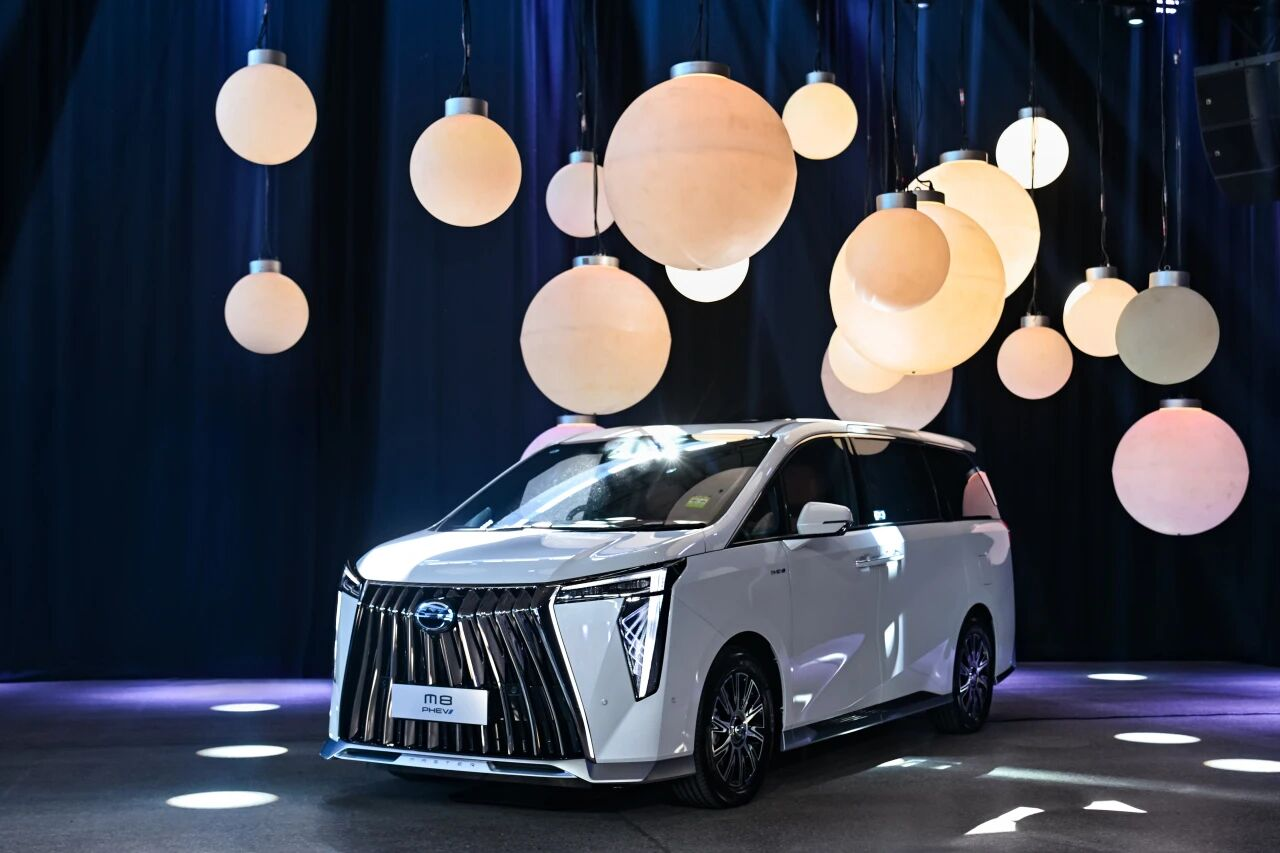
When the trip goes deep off-grid — beyond powered sites and beyond reliable charging — the M8 PHEV is in its element. As a plug-in hybrid, it removes the charging anxiety that can come with venturing far from the grid.
How far can the M8 PHEV travel?
The M8 PHEV has a total driving range of 1,032 km, combining a 106 km (WLTC) electric range with a petrol engine and a 56-litre tank. That covers the long distances of the outback and multi-day touring routes, where charging points are scarce or absent.
Can the M8 PHEV keep powering your campsite when the battery runs low?
Yes — and that's its key advantage. The M8 PHEV supplies power to your camp gear through V2L, and because it's a plug-in hybrid, the petrol engine can recharge the battery on the spot. That lets you keep your camp powered for extended stays, even where there's no power source nearby.
Is the M8 PHEV big enough for a family camping trip?
The M8 PHEV seats seven in a comfort-focused cabin. That comfort extends further to higher grades, which add powered second-row seats with electric leg rests and a one-touch SPA mode. It suits families and larger groups heading remote together — a people mover that combines space, range, and self-sufficiency.
.jpg)
How to Choose the Right Car for Camping?
Choosing a car for camping calls for different priorities than choosing one for daily driving. A few key factors are worth weighing up before you decide:
- Budget: Look beyond the purchase price to the ongoing running costs — energy or fuel, servicing, and insurance all add up over the years of ownership. An EV like the AION V keeps day-to-day energy costs low.
- Distance and frequency: Long, regular trips into remote areas call for a greater travelling range than the occasional weekend getaway. The AION V's 510 km electric range handles most trips comfortably, while the M8 PHEV's petrol backup reaches further when distances exceed charging range.
- Charging access at your destinations: Consider what's realistically available where you camp. Where charging is easy to reach, a fully electric option like the AION V is ideal; where it's scarce, the M8 PHEV's petrol backup removes the risk of being caught short.
- Charging access at your destinations: Consider what's realistically available where you camp. Where charging is easy to reach, a fully electric option like the AION V is ideal; where it's scarce, the M8 PHEV's petrol backup removes the risk of being caught short.
- Capacity for people and gear. Seating and load space decide whether everyone travels comfortably. The AION V's five seats suit couples and small families, while the M8 PHEV's seven seats and generous space suit larger groups and multi-generational trips
- Power requirements. A few lights and a fridge ask little of a V2L system, but a fuller camp setup needs more. The AION V delivers up to 7 kW of output, while the M8 PHEV's petrol backup keeps the power running on extended off-grid stays
Conclusion
Powering a campsite off-grid has always been one of the challenges of camping in Australia, where the best spots are often far from mains power. V2L offers a solution, turning the vehicle itself into a quiet, capable power source. Two GAC models stand out for camping: the AION V, an all-round electric SUV for trips within reach of charging; and the M8 PHEV, a seven-seat plug-in hybrid for remote, family-sized trips, with a long combined range and the reassurance of petrol where charging is scarce. The right one comes down to how, where, and with whom you camp.
To compare the latest specifications and current offers, book a test drive from your nearest GAC Store!
References
- Tourism Research Australia. (2025). Caravan and camping data. https://www.tra.gov.au/en/tourism-statistics/caravan-and-camping-data